


07 Feb If Demographics is Destiny…
“What does a declining U.S. population portend?” – The Lonely Realist
The U.S. Census Bureau recently reported that America’s population for the 12-month period from July 2024 to July 2025 increased by only 1.8 million, or 0.5%…, which is half the rate of population growth America experienced during its prior 50 years, explaining that “[w]ith births and deaths remaining relatively stable…, the slowdown in U.S. population growth is largely due to a historic decline in immigration.” The use of the term “stable” with respect to births, however, is misleading. America’s fertility rate, at ~1.6 births per woman, is far from “stable.” It’s been in decline for >60 years and has been below the replacement rate for >15 consecutive years – actually, for >50 years, since 1972. The Census Bureau report therefore reflects more than simply a declining population trend. America’s population is trending towards a flatline precisely because both America’s fertility rate and its influx of immigrants are in decline on a long-term basis. Yet that is apparently what Americans want. As TLR previously observed, a majority of Americans view fewer immigrants and a static population as a net positive. But what if it’s not? What if the decline in population growth presages a decline in GDP growth, national wealth and global competitiveness?
“Demographics is destiny” is an economic axiom meaning that a population’s size, structure and composition significantly shape its future, including its economy, politics and social structure. An aging population (like Japan’s), low birth rates (like Europe’s), a preference for male children over female children (like China’s) – each has adverse economic, geopolitical and social consequences. Adverse consequences similarly are accruing to America due to its declining fertility rate…, as well as from its aggressive confusing inconsistent immigration barriers policies. The latter is puzzling because, since America’s founding, increases in America’s workforce, its standard of living and its GDP have been the result of significant – and historically unprecedented – immigrant inflows. America’s workforce has never been staffed by native-born Americans. America, after all, is a nation of multicultural, multiethnic, multiracial, multireligious, multinational immigrants. The influx of those immigrants provided the staffing for a vibrant workforce of entrepreneurs and laborers who created businesses (more than any other country) and manufactured products (more than any other country) which, in turn, created national wealth (more than any other country). As other nations have proven, a stagnant or declining population leads to an inadequate workforce, reduced productivity and economic malaise (the same as an under-educated one). Demographics denied therefore results in a declining national standard of living.
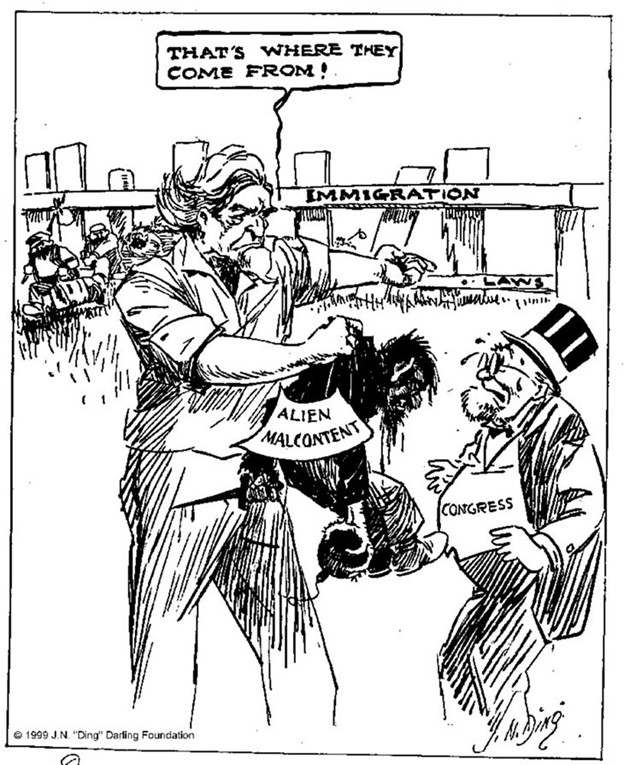
And yet immigration to America today is intentionally being curbed. The Trump Administration has adopted a restrictive interpretation of America’s Immigration and Nationality Act to, among other things, block asylum seekers from entering the U.S., end the process of “catch and release” for illegal immigrants, advance an argument to end birthright citizenship (which has chilled resident immigrants from remaining in the U.S. and dissuaded others from attempting migration), suspend almost all refugee admissions to the U.S., designate members of certain international cartels and organizations as terrorists barred from entering the country, and engage in focused and highly publicized deportations and immigration enforcement proceedings. In addition, the President has signed Executive Orders that restrict, limit or eliminate student (as well as worker) visas as part of an effort to “Protect the Security of the United States.” These cumulative measures are having immediate, meaningful consequences.
It used to be that America was the Mecca for those seeking a higher education or post-degree employment. That has ceased to be the case as America no longer has an open-door for immigrants or visa-seekers. Moreover, American universities no longer monopolize the top spots in global education rankings as there now are multiple competitive alternatives available. America in 2025 nevertheless issued 400,000 visas and hosted 1,200,000 foreign students at American universities, an increase over 2024. However, immigration and visa approval rates are projected to decline significantly in 2026. Many existing visa-holders and students had intended to remain in America, including to start new businesses. A significant number of their immigrant predecessors are CEOs of some of America’s most successful companies – that is, almost half of today’s Fortune 500 companies were founded by immigrants or their children. The recent policy changes therefore are counterproductive since every country in the world is experiencing a transformation to a more highly competitive global economy that is primarily knowledge-based. America needs access to the broadest possible pool of students and workers to continue its outperformance during this period of change in demographics and technology.
The shift in America’s demographics therefore is likely to have a profound impact on America’s economy. Among other things, the combination of the “demographic cliff” of declining birth rates, an aging population and limitations on immigration and foreign student visas will pressure the economic viability of universities. As Bloomberg has reported, this “demographic cliff” already has pushed some colleges to fire professors and pare back courses. Moreover, since 2020, more than 40 schools have announced plans to close, displacing students and faculty and leaving host towns without key economic engines. These closures and mergers already are projected to impact ~600,000 students and redistribute ~$18 billion in endowment funds.
The same “demographic cliff” is coupling with the Administration’s immigration/visa policies to adversely impact American businesses, most obviously in health care where costs are rapidly rising. Does this mean that America’s demographic decline foretells a fraught destiny? That is the risk, and one that not only America is facing. It means that unless nations in demographic decline, including America, adopt appropriate programs to fill widening gaps in their workforce and take steps to imiprove and enhance their knowledge-intensive resources, economic, political and social decline indeed will follow. America’s restrictive immigration and visa policies can only add to its demographic problems.
Finally (from a good friend)


No Comments