


04 Apr The Economics of War – Part 3
“Hope for the best, but plan for the worst.” – The Lonely Realist
Today’s TLR continues to analyze the potential economic fallout from the Iran War by assessing the consequences of two “what if” possibilities: What if (1) there will not be a negotiated settlement; and (2) President Trump will not TACO by declaring victory and leaving Iran in control of the Strait of Hormuz and in possession of enriched uranium. Iran’s Theocrats appear to have adopted a strategy that precludes a negotiated settlement– that is, they believe that the U.S. will tire of the War and soon withdraw from offensive action against the regime. They accordingly will not agree to a ceasefire or to any part of President Trump’s 15-point peace proposal. Most commentators understand that the Theocrats have little incentive to do so having already suffered a major military defeat without losing control of the Iranian population. A political analysis of America’s position suggests a similar conclusion: The President launched the War without (a) Congressional authorization, (b) sufficient funding, (c) sufficient oil (gas or fertilizer) reserves, (d) sufficient munition reserves, (e) a strategic roadmap, (f) allies beyond Israel (and now is facing pushback from former allies Spain, Italy, France, Egypt, Qatar, Turkey and others), and (g) domestic support. As a result, the Theocrats may be correct that time is their best weapon. If that is the case, as TLR cautioned at the War’s beginning, the Middle East and large portions of the rest of the world will face increasing economic pressures. What might that mean?
Surprisingly, stock market prices to-date have been relatively unfazed by the War. The S&P500 is 4.3% below its February 27th close and only 6% below its all-time high in January…, despite the fact that the media have been screamingly negative…, or perhaps because President Trump has been so positive. Investors apparently agree with the President that America’s military dominance will be successful, the President having said that the War will be “wrapped up shortly,” within the next “two or three weeks.” After 5 weeks of War, such an optimistic belief appears…, quite optimistic. After all, the Theocracy’s goal has been survival, and it very much is surviving…, and doing so without losing control of its citizenry, the Strait of Hormuz or the flow of revenue from sales of Iranian oil (as well as tolls collected from tankers transiting the Strait). Whereas prior to the War, Iran was cut off from the world economy, it now has cut the world economy off from significant supplies of oil (gas and fertilizer). Because President Trump has kept the world’s media hopping with his flexible scripts (e.g., “The war in Iran has been won,” America is having “VERY GOOD AND PRODUCTIVE CONVERSATIONS… WITH A TOP [IRANIAN] PERSON,” “we’re going to bring [the Theocrats] back to the Stone Age, where they belong, [although] discussions are ongoing”), stock market investors have bought into the belief that the Iran conflict will be resolved quickly and without significant consequences. However, if the combination of the Theocratic Republic’s chokehold on the Strait of Hormuz and its ability to damage oil (gas and fertilizer) production and infrastructure throughout the Middle East continues, a stock market purge is inevitable. As TLR wrote early in March, “If the U.S. fails to re-open the Strait within the next ~3 months, the impact on the global economy will be severe.”
TLR understands that, even were the War to end as soon as the President has indicated, energy prices and inflation will continue to increase for the next few months. This is because the current disruption to global oil (gas and fertilizer (and also helium)) supplies is significantly more severe than the OPEC embargo of the 1970s. A slowdown (and possible reversal) in GDP is a predictable consequence. As The Economist has noted, even were the Strait of Hormuz reopened tomorrow, it would take weeks for traffic to return to pre-War levels: “Even if Donald Trump and Iran reached a deal to stop fighting tomorrow, it would thus be another four months before markets regained some semblance of normality.” The longer the conflict, the greater the impact on energy and food prices, inflation, GDP, employment, etc…, and significantly more so should the Theocracy remain in power with the ability to control the Strait and continue threatening its Middle East neighbors. Even without TLR’s “what if” scenario and no matter America’s level of success in pursuing the next few weeks of War, inflation is set to rise, the economy and the labor market are likely to weaken, and energy prices will continue to be under pressure (the latter to the benefit of Russia, China and (of course) the Theocracy). Stock markets will reflect these economic realities…, which may be worsened by instabilities arising from the AI revolution, the tariff wars, private credit concerns, the major leadership transition at the Federal Reserve, climate change, America’s rising debt and deficits, and the erosion of Western alliances (well-framed by President Trump) and the end of the U.S.-led “rules-based world order.”
The Theocracy currently has the unilateral ability to limit shipping through the Strait of Hormuz, giving Iran the power to cut off oil (gas and fertilizer) supplies selectively, which it is doing while, at the same time, imposing fees for those it chooses to allow through (and accepting payment in Chinese Yuan). The Theocracy therefore has little incentive to admit defeat and cede power. Should the Theocracy retain control of the Strait, stock market prices will have to adjust to longer-term, higher energy costs, the potential for further disruptions, and lower global growth. Those consequences would be greatly exacerbated if TLR’s “what if” scenario should come to pass. If so, President Trump would find it necessary to commit ground troops to Iranian targets (Kharg Island, the Strait, etc.), lengthening and deepening the conflict and causing crude oil prices to rise to $150/barrel and more…, and thereby increase the risk likelihood of global recession.
TLR’s “what if” assumptions lead to a worst case outcome, while a far different perspective on the success-to-date of America’s and Israel’s military campaign leads to a best case outcome where America achieves victory because Iran’s air defenses, air force, navy, ballistic missiles and drones are eliminated and the Theocracy therefore no longer has the capacity to produce a nuclear weapon or disrupt the Middle East. If that analysis proves correct, the consequence will be a popular uprising that deposes the Theocrats. Moreover, if correct, the pain imposed by America’s and Israel’s bombing and decapitation strategies could soon lead the Theocrats to sue for peace. Either outcome would reduce energy prices and, should they occur within the next 2 months, are likely to result in a year-end oil price reduction of >40% along with major stock market buying opportunities.
TLR (again) awaits further developments.
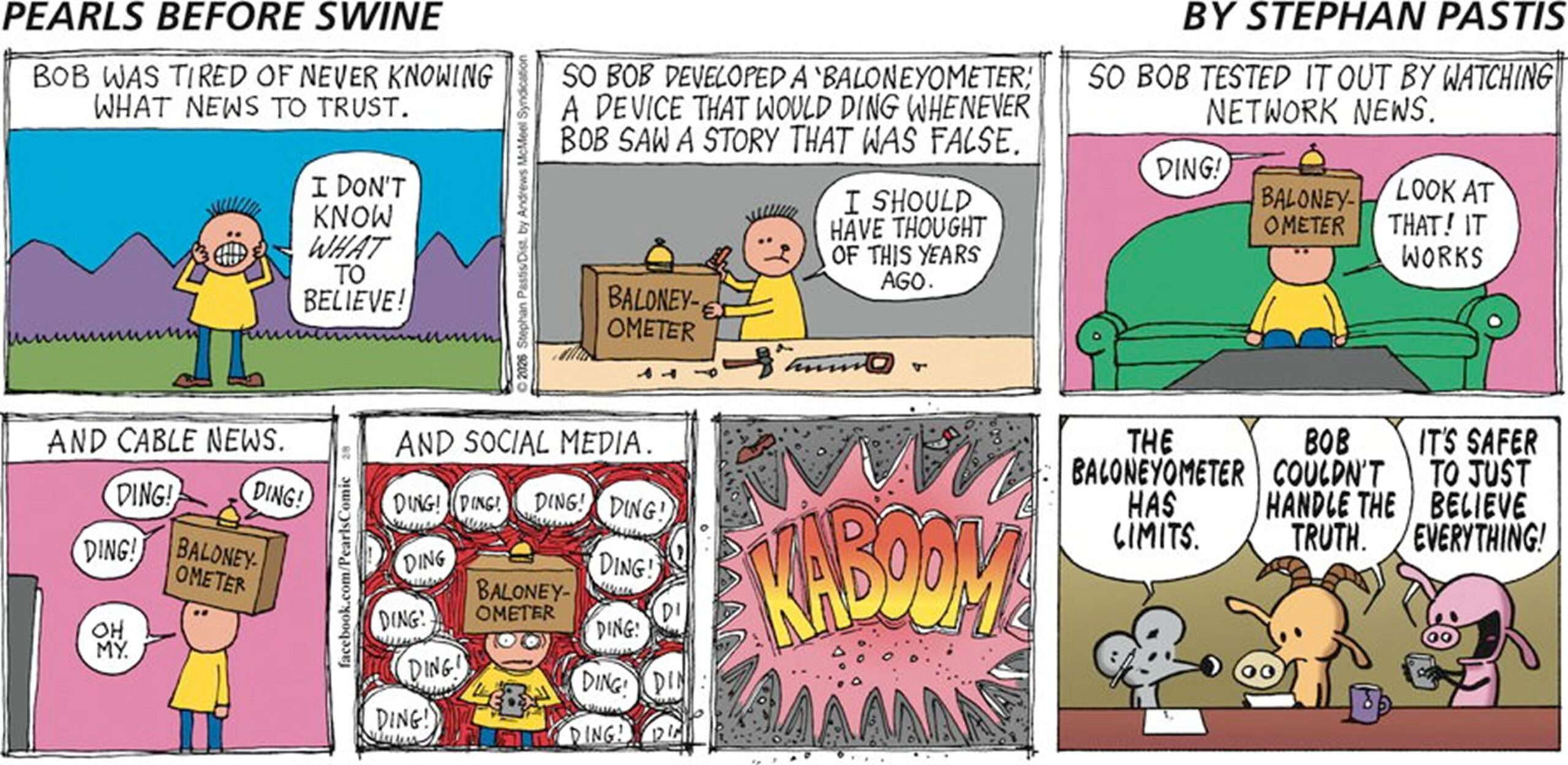
Finally (from a good friend)


No Comments