


02 May War and Inflation
“The Iran War is igniting an inflationary bonfire.” – The Lonely Realist
TLR yesterday had the opportunity to discuss economics with Cassandra, the mythical Trojan priestess gifted by the Greek God Apollo with the ability to make accurate prophesies but burdened with the curse that her prophesies would not be believed. As readers of TLR are aware, there have been many times over the last 7+ years when TLR has tapped into Cassandra’s predictive abilities. Some of her predictions have proven accurate and others less so…, which is the risk when consulting a mythical figure. Cassandra, after all, is not a goddess herself. She is an interpreter of portents, sifting data to discern future probabilities, using 3,000 years of historical experience for her predictions. However, even with her record of discerning prophecies, readers should be aware that her views are not investment, economic, legal or tax advice.
TL Realist: Good afternoon, Cassandra. Thank you for taking the time today to visit.
Cassandra: The pleasure is all mine, Mr. Realist.
TL Realist: As you and I previously discussed, our focus today will be on economics and, specifically, inflation. Before we begin, however, I’m interested in your political perspective on the implications of Niall Ferguson’s recent economic piece, “The Gap Between Truth (Social) and Reality on Iran,” in which he highlights President Trump’s contradictory statements, what some have called the President’s “truthiness” practice.
Cassandra: You apparently do not recall, Mr. Realist, but I do not discuss American politics. I am a guest in America and wish to remain a welcomed one.
TL Realist (laughing): A wise policy, Cassandra.
Let’s therefore focus on Mr. Ferguson’s explanation of the possible reasons for America’s ever-rising stock market. Mr. Ferguson points out that even though oil prices today are >50% higher than their pre-Iran War level, the War initially triggered only a relatively small stock market correction. Prices dropped by less than 8% and, since March 30, the S&P500 has climbed 14%, closing this week at an all-time high. Mr. Ferguson suggests 3 possible reasons why the markets are being optimistic: (1) they believe that the War will be over by the end of May and things will quickly return to pre-War normality, a conclusion he rejects; or (2) the AI revolution will continue propelling markets to new heights; or (3) the markets are fooling themselves and are likely to experience the same calamitous outcomes as occurred “in July 1914, September 1929, December 1972, August 2000, October 2007, and February 2020—all months when stocks reached highs shortly before reality struck devastating blows,” which he believes to be the most likely outcome. What is your view?
Cassandra: Although Mr. Ferguson’s analysis is thoughtful and well-documented, the reasons for the stock market’s stellar performance are largely irrelevant. He and I agree that prices will continue rising for the foreseeable future. They are being driven by many factors in addition to AI, including earnings expectations that have been gaining momentum, with reported earnings exceeding expectations, by investors’ reluctance to incur capital gains taxes, and by a fear of missing out (FOMO). The result is accelerating prices confirming that buying the dip is the most successful of 21st Century investment strategies, one that also serves as a cushion against surprises. Although these will continue to drive the stock market higher, to a very substantial extent they are a consequence of increasing inflationary pressures.
TL Realist: Before we move to a discussion of those inflationary pressures, Cassandra, I am surprised that you are echoing the consensus of stock market analysts who insist that stock prices will continue rising. You have been a longstanding contrarian and yet you now agree with the pundits. Are you also confident that a bear market is not in the cards and that, if necessary, the Federal Reserve will intervene to nip problems in the bud? Why the positive change in perspective?
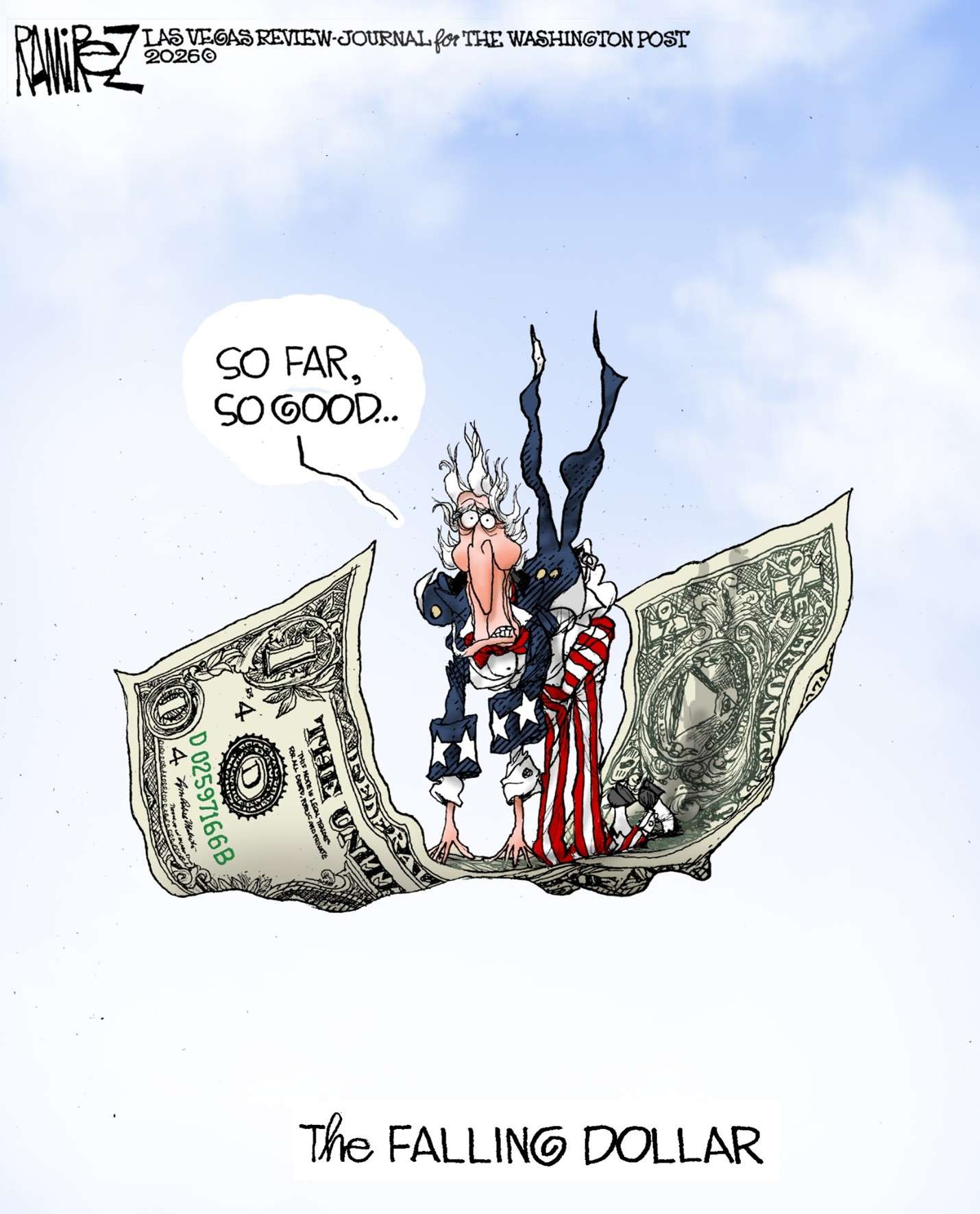
Cassandra: My predictions are far from positive, Mr. Realist. Today’s rising stock prices are not the sign of a healthy economy or of a favorable geopolitical environment. You – as well as analysts and investors – are misunderstanding the insidious effects of rising inflation. Although it is the reason why stock prices will stage a multi-year ascent, it also is the reason why America’s standard of living will decline. Inflation, after all, is not about transitory price increases. It is fundamentally about money and its relative utility. Prices rise not because the intrinsic value of goods somehow is enhanced. They rise because the money needed to buy them becomes less valuable. That’s as true of stock prices as it is about consumables.
TL Realist: How serious will that inflation be?
Cassandra: It will be serious in part because of its persistence. In launching the War, America sent energy and fertilizer prices skyward. The value of energy and food, among others, therefore indeed was enhanced. America’s March CPI (which was understated) showed what is coming in terms of reported inflation. Of the 20 million bpd of oil that flowed through the Strait of Hormuz before the War, 7 million has been rerouted, leaving a 13 million bpd deficit. The market hasn’t yet priced that in because it’s been assuming that President Trump or Iran will blink. Yet Hormuz remains closed in both directions, President Trump saying this week that America’s blockade will not end until Iran agrees to surrender its nuclear materials. Meanwhile, Iran’s leadership has reaffirmed that Iran will never give up its nuclear and missile capabilities. As a consequence, there’s no longer any pretense of serious negotiations. With oil at $100-$120/barrel and with fertilizer and other critical materials in shortening supply, inflationary pressures are building. They will continue doing so until the War ends, whenever that might be.
TL Realist: My understanding, however, is that you are attributing long-term inflationary pressures not to supply constraints, but to the declining value of fiat currencies, especially the Dollar. Is that correct? If so, what does that portend for Dollar alternatives, like gold and Bitcoin, the prices of which thus far have been weakened by the War?
Cassandra: You are correct, Mr. Realist. The value of paper money depends on confidence and the Dollar has been losing the world’s confidence for some time, a trend that now is accelerating because of the War and its fallout. Fiscal deficits in the U.S. are running at 6% of GDP and are adding $2 trillion/year to America’s already excessive >$39 trillion national debt. A declining Dollar indeed favors Dollar alternatives. Bitcoin may be a speculative investment that invites skepticism, but its longevity and popularity cannot be ignored, especially in times of stress. Gold also should shine in such times.
TL Realist: You once again are making bold predictions, Cassandra. including about accelerating inflation and weakening Dollar hegemony. Yet there is no doubt that Iran will be the biggest loser from the War. Will there be any economic winners?
Cassandra: Yes, Mr. Realist. China. Although it imports oil through Hormuz, it holds larger energy reserves than others and dominates renewables, a market that will benefit significantly from increased oil and gas prices and enhanced energy risks. It also controls the hardest-to-replicate layers of global industrial supply chains. Chinese industrials, chemicals, and logistics firms accordingly will be significant beneficiaries.
TL Realist: Thank you, Cassandra.
Finally (from a good friend)
No Comments