


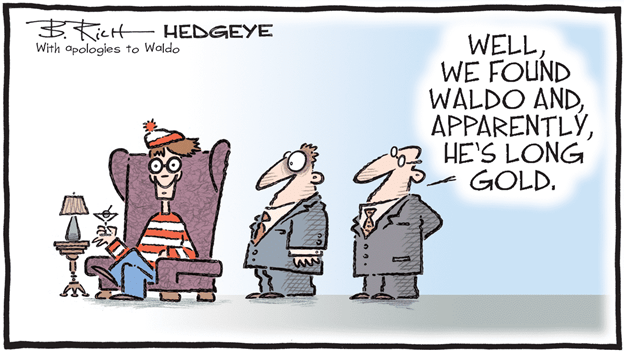
07 Mar Gold is not an Investment Asset
“Gold is a rare, corrosion-resistant precious metal used for thousands of years as a currency, in jewelry and, more recently, in technology.” – The Lonely Realist
Physical gold, as well as silver, is many things…, but it’s not an “investment asset.” Gold/silver are trading assets. Something to bet on. That’s because the risk and reward profiles of physical gold and silver differ from those of stocks, bonds and real estate. “Investment assets” generate income. Their profitability is based on fundamental value and their internal prospects give them long-term potential. Physical gold and silver do not generate income. Their value fluctuates based on externalities that ebb and flow over time. Moreover, there are significant risks inherent in holding physical gold and silver. Both are volatile…, very volatile. Buyers must pay a premium to purchase physical gold and silver. Holding gold and silver incurs unique storage costs. Selling physical gold or silver can be effected only at a discount. Gold and silver do not pay dividends or interest and cannot be used as substitutes for cash to pay for goods or services. In short, physical gold and silver are as John Maynard Keynes said, “a barbarous relic.” Although they once were the leading media of exchange, that time has passed…, unless, that is, barbarity once again is becoming an economic reality.
The fact that physical gold and silver are not traditionally viewed as “investment assets” doesn’t mean that they don’t have value or can’t appreciate. Gold and silver bullion (and gold and silver ETFs) are successful hedging tools, especially during “barbarous times” – such as when there is high inflation, war, geopolitical turmoil, or financial crisis. Also, because gold’s and silver’s supply is finite – as well as the fact that gold and silver are expensive to discover (particularly in quantity) and extract –, gold and silver can be quite useful as “stores of value” and “safe havens.”
While physical gold and silver (and their ETFs) are not appropriate “investment assets,” publicly-traded gold and silver mining stocks very much are, the reason being a combination of the short- versus long-term carrying cost differential between holding physical gold and silver and investing in the businesses of precious metals producers, differences that are vividly illustrated by recent enthusiastic (and highly volatile) precious metals trading versus undervalued measured precious metals equity investing. Buying bullion is a macroeconomic bet on the value of gold/silver – and, specifically, on their value versus the “reserve currency” Dollar –, a supply-demand equation driven by sovereign governments’ geopolitical policies and external factors that generally are short-term. Investing in established miners is a different calculation with a different constituency. Mining company share prices are based on the cash that will flow from the sale of metal-in-the-ground – that is, the valuation of mining companies is driven by their projected future “net profits,” the extent to which miners’ receipts from the sale of “proven” and “probable” resources exceed their “all-in sustaining costs” of extracting those resources (AISC) calculated on a “discounted net cash flow” basis (DNCF)…, the same formula used to value all operating businesses. Established mines accordingly serve as long-term underground bank storage vaults where the value of as-yet unmined gold/silver is determined by their quantity/quality, the relevant time period over which extraction and sales will be made, and estimated selling prices. It is this last item that today is making publicly-traded precious metals equities attractive, with projected prices being estimated by reference to the average price of the metal over the immediately preceding several years. In a rising market, like today’s, the DNCF calculation therefore undervalues mining companies, a defining feature for precious metals companies over the last ~5 years during which valuations have been based on price assumptions that have materially lagged the spot price. As those prior years’ prices recede, selling price projections will increase and so will DNCFs…, and with them the fair-value share prices of established mining companies. If forward pricing estimates are correct – or if current price levels simply hold –, miners soon will be generating significantly increased profits and distributing increased dividends…, and their share prices accordingly will multiply (as long as they maintain reasonable control over their AISCs). That is why the share prices of gold and silver mining companies today are lagging behind the spot prices of gold and silver. Although the MarketVector Global Gold Miners Index has delivered strong gains over the past few years, it (and the substantial majority of its components) still has underperformed the cash market.
There will always be new discoveries of gold and silver and there will always be new mining companies seeking to make those discoveries. The race to find new discoveries is also being pursued by established mining companies in an effort to replace and expand their depleting resource bases. Finding new deposits and expanding existing ones is a difficult, capital-intensive task. Investors seeking to discern winners from losers in this race do not possess the expertise necessary to make informed decisions. They cannot have an understanding of project-specific AISC and DNCF issues or knowledge of site-specific metallurgy and geology. Investing in precious metals companies based on the potential for successful discovery of a new resource therefore is a wildcatting bet and not an investment…, much the same as trading on the price of gold or silver. The opportunity for spectacular profit and disconcerting loss among precious metals miners, both wildcatters and established mining companies, is real, but the essence of successful investing is seeking and uncovering undervaluation. Established mining companies with experienced management and diversified producing mines located in stable jurisdictions fall within that definition and accordingly represent attractive “investment assets.”
Precious metals bulls who believe in an upside scenario for gold/silver can trade in the cash (or ETF) markets or can choose to invest in publicly-traded precious metals companies. Ongoing geopolitical risks, trade policy uncertainty and sustained inflationary pressures arguably favor gold/silver speculation, though analyst opinions vary. Moreover, advances in mining technology and shifts in consumer demand in industries like electronics and jewelry will continue to influence gold and silver production and prices. Those who choose to speculate on the price of gold/silver in the short-term or on the success of a mining company’s exploration and discovery of new resources are making a bet. Those who choose to take a long-term perspective are relying on a complex analysis of macroeconomic forces combined with fundamental factors that they expect will drive up the prices of individual precious metal equities. Each approach has its risks.
Finally (from a good friend)


No Comments