


26 Mar There is No Winner
“History doesn’t repeat itself, but it often rhymes.” – attributed to Mark Twain
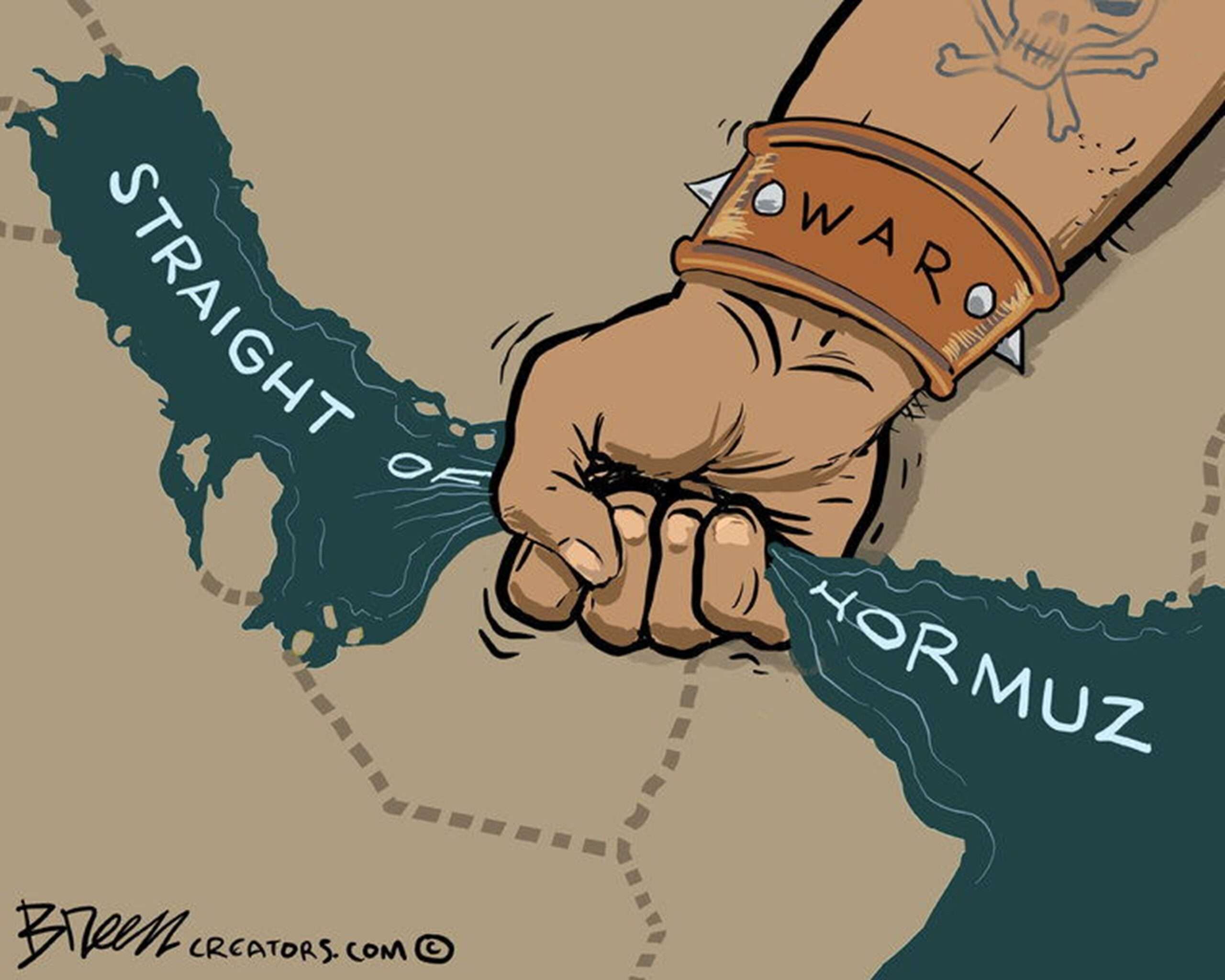
TLR earlier this month addressed three possible outcomes for the Iran War. The first is the one sought by America and its allies: America and Israel pulverize the Iranian Theocracy, the Iranian people take up arms, overthrow the Theocrats and create a new government satisfactory to America. The second is the outcome sought by Iran’s “Islamic Theocracy”: their IRGC-led Islamic Republic survives and, in doing so, gains credibility as a source of religious militarism, global terrorism and Middle East instability. The third possibility is that neither combatant emerges victorious, there is no definitive resolution, and chaos ensues. Needless to say, after only 4 weeks of War, the outcome remains clouded in a fog of war. To date, however, the Islamic Theocracy has enjoyed unexpected success in light of the disproportional military forces arrayed against it. There has been no sign within Iran of armed revolutionaries in a position to overthrow the regime and there is no evidence that American and Israeli bombing alone will be able to dislodge the Theocrats. Because the Theocrats devolved military command-and-control to independent IRGC cells, Iran has been able to inflict damage on America and its allies even though more than half of its senior leaders are dead, its air defenses, air force, navy, missile bases and much more have been destroyed, and it has no chance of victory in a literal sense— as TLR previously observed, “the degradation of the Islamic Republic as a military and nuclear power has been enormous and is likely irreversible.” Nevertheless, the Theocracy maintains effective control over the Strait of Hormuz, a global energy choke point. In addition, its ability to damage oil (gas and fertilizer) production and infrastructure throughout the Middle East provides significant leverage. It is far from being vanquished and, as a consequence, global oil (gas and fertilizer) prices have taken flight. More importantly, the world now has awakened to the fact that Iran holds a strategically critical oil (gas and fertilizer) card…, a rude awakening for those who believed that America’s military dominance would make short work of the Theocrats and their threats, nuclear and otherwise.
As a consequence, no matter how much damage is inflicted on the Islamic Republic, the IRGC and the Basij, unless the U.S. quickly retakes control of the Strait of Hormuz, thereby ensuring the safety and free passage of Middle Eastern oil (gas and fertilizer), America will be seen as losing. While President Trump has said that “we are getting very close to meeting our objectives as we consider winding down our great Military efforts in the Middle East,” that is misdirection. America’s military campaign has barely begun, with far more undoubtedly planned. Even though it appears that the U.S. may have shelved its goals of destroying Iran’s uranium stockpiles and effecting regime change, that is not likely the case. Abandoning those goals would simply return Iran to the status quo ante, an unacceptable outcome. The U.S. will not simply walk away and leave the Theocracy in a position to squeeze global oil (gas and fertilizer) supply whenever it might choose. American boots on the ground are inevitable, first to re-open the Strait and then to realize the additional goals sought by the President. Although President Trump also has said that America and Iran are “in negotiations right now” and that Iran “wants to make a peace deal,” that too is misdirection (and the Islamic Republic has denied both, although the Theocrats are always happy to play for time). The President’s transactional approach to geopolitics was highly successful in Venezuela and President Trump may have believed that it would be equally successful in Iran. America, however, is facing a more challenging adversary in the Islamic Republic. The Theocrats have a firmer grip on power than did Nicolás Maduro and will be dislodged only by the American military physically taking control of Iran’s strategic assets. Allowing Iran to retain the ability to shut down a significant percentage of global oil (gas and fertilizer) supply would undermine American power and credibility. Since control of the Strait is the Theocrats most powerful weapon, the odds of a negotiated settlement are exceedingly long. Therefore, either the Strait of Hormuz will remain in the control of the Theocracy or the Strait will pass to American dominion and America will assume responsibility for maintaining its safety and free passage. There can be little doubt that President Trump will pursue the latter outcome.
Achieving even the modest goal of re-opening the Strait frames an American timing and logistical problem. The Theocracy, like the Viet Cong during the Vietnam War, has no time limit for achieving its goals. It can wait 1 month or 1 year or 10 years. America, however, is bleeding money and international geopolitical capital (and the Trump Administration is bleeding domestic political capital). Much like the Vietnam War era, there is substantial public opposition to the War, with a sizable “end-the-war-on-any-terms” sentiment. Moreover, America is incurring substantial financial costs – ~$1 billion/day – and its bombing actions are reducing its stockpile of munitions and the critical minerals necessary to produce them. Those munitions and minerals cannot easily or quickly be replaced since China has effective control over production of those necessary war minerals and is closely monitoring America’s every action, both in Iran and globally.
Niall Ferguson recently focused on the distractions innate in America’s Iran War actions, including that the War prevents America’s military from adequatly addressing “the next great global choke point: the Taiwan Strait,” adding that “[m]ore than 90 percent of the world’s most advanced semiconductors, and 99 percent of the chips used for cutting-edge AI training, are manufactured in Taiwan. Taiwan imports 97 percent of its energy supply in the form of oil, LNG, and coal. This makes the Taiwan choke point far more important in relative terms than the Strait of Hormuz has ever been for global energy markets.” He concludes: “The Strait of Hormuz is blocked. For how long? The Strait of Taiwan is open. For how long?… [I]f Trump’s advisers do not keep their wits about them, they may overlook the fact that they have created a huge strategic opportunity for China and Russia — especially if they act in concert.”
The closing of the Strait of Hormuz has created an energy shock and, at the same time, is degrading/reducing the quantity of American munitions. America’s dependence on Chinese-sourced minerals, both for restocking its ammunition reserves and for advancing its technologies, creates not only opportunities for China, but also for Russia – Russia is being incentivized to move more forcibly against Ukraine and even to take aggressive actions against NATO. This is because the Iran War has made America more vulnerable, and also because America’s military has not been prepared to fight on more than one front. Unless America can demonstrate that it can quickly and effectively overcome Iran, a small, weakened adversary, America can expect its more potent adversaries to leverage their tactical and geographic advantages.
TLR awaits further developments.
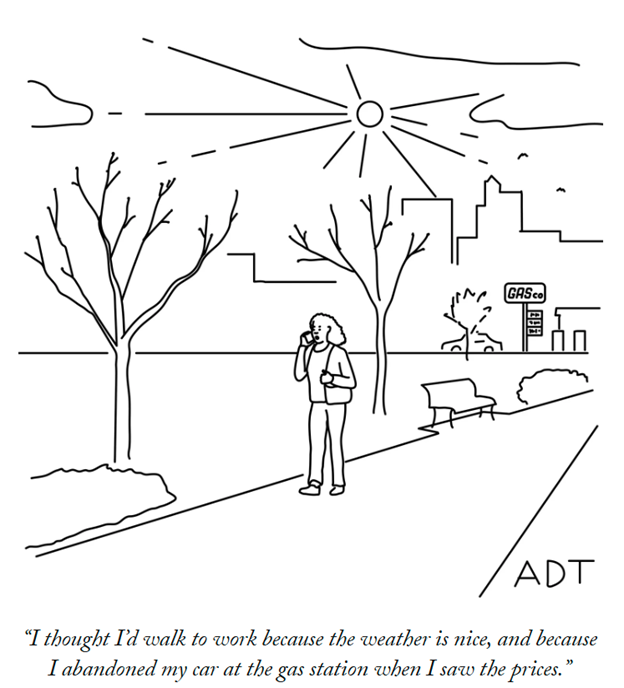
Finally (from a good friend)


No Comments