

20 Dec The Warner Merger (and Heather Cox Richardson)
“Political PR ignores market analysis.” – The Lonely Realist
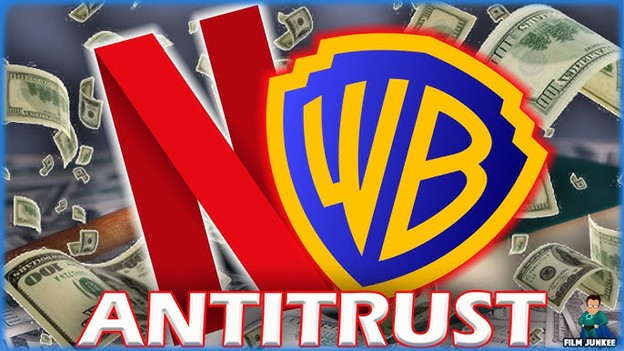
M&A (mergers and acquisitions) is a challenging business in which brilliant businesspeople spend an inordinate amount of time in merger battles. Yet, a multi-decade analysis by The Economist concludes that “the odds of [M&A] success appear no better than a coin toss.” The reason that prolific M&A activity continues is that potential acquirers enjoy pitting their vision and ego against economic reality. From the leveraged buyout of RJR Nabisco in 1988, to the merger of AOL and Time Warner in 2000, and the merger of AT&T and (again) Time Warner in 2018, M&A has all-too-often left a tragic trail of disastrous economic outcomes. The merger battle for Warner Bros. Discovery Inc. (yes, Warner yet again) frames that economic issue for the two competing bidders, Netflix Inc. and Paramount Skydance Corp…, although Heather Cox Richardson, a Democratic Party “supporter,” asserts that Paramount’s pursuit of Warner is part of a strategy to “create a right-wing media ecosystem dominated by the Trumps.” In support, she notes that Paramount has told Warner shareholders that its bid is superior to Netflix’s in part because it has been praised by President Trump (and therefore offers a clearer path to Federal Trade Commission (FTC) and Department of Justice (DOJ) approval) – which is true, in part because the President’s son-in-law and the Ellison family (Trump supporters) are part of the Paramount acquisition group – which is true, and in part because the President has expressed skepticism over Netflix’s legal ability to consummate the merger (since Netflix’s acquisition of Warner raises substantive antitrust concerns) – which also is true. Ms. Richardson accurately states the facts, but those facts ignore the business realities.
The Warner merger story began with an auction process in which Warner received two competing bids, one from Netflix for $23.25 per share in cash, plus $4.50 worth of Netflix stock, plus stock in a new company (that would include CNN) for a total purchase price of $29.75-32.75 (the cash portion of which would be self-financed), and a second from Paramount for an all-cash payment of $30 per share (or $108 billion) (subject to enumerated sources of financing). The success of each offer is subject to FTC and DOJ approval (requiring perhaps a year or longer), which favors Paramount since Netflix has a high antitrust hurdle because of its far larger market presence (and a market cap of >$400 billion compared to Paramount’s <$15 billion). Despite the FTC/DOJ hurdle, Netflix has expressed confidence in the antitrust process by including in its acquisition agreement a “breakup fee” of $5.8 billion. In part because of Paramount’s financing explanation and in part because Warner shareholders would receive cash and continue to own shares in both Netflix and a new Warner entity, Warner’s board of directors chose the Netflix offer.
The story doesn’t end there, however, because Paramount doesn’t merely want to merge with Warner, it needs to acquire the Warner assets in order to be competitive in the ongoing Hollywood streaming wars (as discussed by The Economist). A merged Netflix-Warner would present an insurmountable barrier for Paramount. As a consequence, after receiving the Warner board’s decision, Paramount took its offer directly to Warner’s shareholders, proffering the same $30/share in cash it had presented to Warner’s board. In explaining its offer, Paramount argued that its bid is superior to Netflix’s because it is an all-cash offer – shareholders therefore wouldn’t have to wait and see what the “other stuff” that Netflix is offering is worth. As an additional inducement, Paramount added that it is prepared to increase its bid if Netflix ups its offer. Warner thereafter advised shareholders to reject Paramount’s $108 billion offer. Shareholders have until January 8th to make their decisions (although they would have to wait until the FTC and DOJ have completed their review before they receive their cash). Counteroffers and further negotiations can be expected.
Ms. Richardson’s analysis ignores the obvious business rationales. She states that what is “[a]t stake now is CNN, which Netflix doesn’t particularly want but Paramount does, either to neuter it or turn it into another version of Fox News.” She finds support for this interpretation in a WSJ report “that [Larry] Ellison [who controls Paramount] told Trump he would make ‘sweeping changes’ to CNN if Paramount acquires Warner…, [noting] that ‘Trump has told people close to him that he wants new ownership of CNN as well as changes to CNN programming.’” Assuming, as is likely, that the statements attributed to Mr. Ellison and President Trump are correct, courting government approval for a business combination is far from unusual and apparently a necessity when dealing with the Trump Administration. Even so, the political/CNN angle would not justify Mr. Ellison and his allies paying $108 billion for Warner without a belief that a merged Paramount-Warner would more than repay their investment. After all, not acquiring the Warner assets would put Paramount at a significant business disadvantage. Moreover, absorbing Warner would provide it with the gravitas to compete with all comers, including Netflix.
Ms. Richardson’s focus on CNN ignores the critical business and legal question of whether a Netflix-Warner merger would be better for American industry than a Paramount-Warner combination. That is a determination that prior Administrations delegated to the FTC and DOJ. Ms. Richardson should be focusing on whether today’s Federal agencies will make their decision based on appropriate economic and legal analyses or Presidential fiat…, which is precisely the question that the Supreme Court soon will address in Trump v. Slaughter, brought by FTC Commissioner Rebecca Slaughter after she was dismissed for political reasons by President Trump. Should the Supreme Court decide Slaughter in favor of the President’s right to remove and replace agency appointees, the betting is that Paramount will prevail (noting that President Trump’s FTC Chairman, Andrew Ferguson, has relabeled the agency the “Trump-Vance FTC”). More importantly, should that be the Supreme Court’s decision, Presidents hereafter will be able to exercise unlimited executive power – there would be no need for regulatory experts or agencies. Only a Constitutional amendment could change that. On the other hand, should the Supreme Court hold against the removal of Ms. Slaughter, it will be interesting to see how the Warner merger war plays out.
Finally (from a good friend)
No Comments