


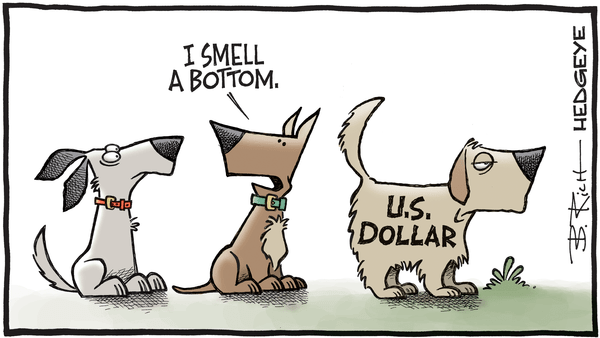
14 Feb Will the US Dollar Surrender its Reserve Currency Crown?
“Reserve currencies never die; they just fade away.” – The Lonely Realist
A number of readers have challenged TLR’s assertion that the US Dollar’s “exorbitant privilege” is eroding. They are skeptical that any level of actual de-dollarization is occurring and dismiss TLR‘s repeated warnings about the potential fallout from a weakening Dollar. They take even greater issue with those commentators who are predicting climactic Dollar debasement based on a belief that “de-dollarization will happen slowly…, then all at once,” as Ernest Hemingway described bankruptcies. The Dollar, they believe, is and will remain the King of Currencies. They insist that there are no realistic challengers and that none are on the horizon. They therefore are confident that the Dollar will not be replaced in any foreseeable future. TLR agrees that the Dollar, like its reserve currency predecessors, indeed will not cease to be a cornerstone an integral component of global finance for many years to come. A sudden end to Dollar leadership is not imminent. Yet it’s impossible to conclude that the Dollar’s universality and importance isn’t fading. Evidence of the Dollar’s waning role in global finance abounds, driven by fundamental forces. Moreover, it’s impossible to escape the conclusion that the Dollar’s dominance is destined to further erode because of the additional challenges unleashed by America’s policy, debt and deficit choices.
The Dollar System that has anchored global finance since the mid-20th Century did not arise naturally. It was created in 1944 by the Bretton Woods Agreement, which provided that foreign currencies would be pegged to the Dollar and that the Dollar would be backed by gold at $35/oz. A run on America’s gold resulted in America disowning Bretton Woods (and the gold standard) in 1971. That was the beginning of the Dollar’s “fiat” reign as the world’s reserve currency – “fiat” meaning “currency-by-decree.” America’s Dollar global leadership has endured because substantially all international oil and gas transactions – providing the energy that has powered global growth – are denominated, priced and settled in Dollars, and because America has possessed, and still possesses, the world’s strongest military and its largest economy. Since 1971, substantially all international trade has required Dollars that utilize America’s SWIFT payment system. The pricing of oil and gas in Dollars has meant that the world’s agricultural and manufacturing production has depended on countries holding large reserves of American Dollars to enable them to purchase the energy necessary to run their economies. A substantial portion of their Dollar reserves necessarily have found their way into U.S. Treasury investments (as well as U.S. equities), which have funded American growth, consumption, deficits and debt and which form the foundation of and continue to reinforce America’s “exorbitant privilege.”
The foregoing explains why President Trump is promoting oil and gas (and coal) over green alternatives (his “drill baby drill” mantra) in what in substance is an effort to preserve the Dollar’s energy primacy and thereby strengthen its role as the global reserve currency. China has long recognized that the Dollar’s practical monopoly on oil and gas transactions (and America’s military and economic dominance) is a barrier to China’s Renminbi aspirations (units of the Renminbi are denominated in “Yuan”). It’s only recently, however, that President Xi publicly acknowledged China’s designs for the Renminbi as a Dollar alternative and a global reserve currency in its own right, the reasonable outcome being for the Renminbi eventually to leapfrog the Dollar. To achieve its goal, China has been pursuing multiple strategies, including reducing its holdings of public and privately-owned U.S. Treasury securities. It also has successfully placed the Renminbi at the heart of green energy technologies by prioritizing State-funded predatory pricing. China accordingly has established a virtual monopoly on the extraction, production and refining of rare earth metals and other critical commodities and is leading the world in nuclear reactor research and construction. (At the same time, it has made enormous advances in its military capabilities.) It believes that the world will need green energy, first as a supplement to, and then as a substitute for, oil and gas (and coal). It has bet that oil, gas and coal will not continue to be the world’s sole energy sources, and that, in time, they may well cease being the primary focus of energy production. Its energy efforts have yielded palpable progress evidenced by the Renminbi’s increased share of global currency transactions. Even so, the Renminbi in the near-term cannot achieve more than industrial- and geographically-specific inroads into the Dollar’s dominance. China’s Renminbi cannot today challenge the Dollar’s broad global reach since China lacks America’s market mechanisms, bond market depth and breadth, cross-border relationships, and free-floating currency that today make the Dollar the world’s reserve currency.
Yet it is not only the Renminbi that is making inroads into the Dollar’s dominance. In addition to the Japanese Yen, Euro and Swiss Franc, which in various contexts themselves are alternative “safe haven” currencies, gold has been successfully competing for an enlarged share of the Dollar’s global investment pie. It is, after all, an historically trusted, scarce physical asset that has been a long-term store of value, an accepted medium of exchange, and the ultimate “safe haven” asset that retains purchasing power during inflationary periods, geopolitical crises, and economic downturns. It therefore is not surprising that gold-buying by central banks has been accelerating. So has gold’s share of countries’ monetary reserves and of investors’ savings. China, moreover, also is amassing gold to back the Renminbi, doing so by hoarding production and increasing purchases, and Russia, another American adversary, has mirrored China’s gold-buying. The two are the largest global acquirors of gold…, and that’s true even though China apparently is underreporting its gold purchases. Much like the Renminbi, gold, however, cannot itself displace the Dollar. As John Maynard Keynes famously remarked, gold is a “barbarous relic” that, because it is not a “hard currency,” cannot be used for day-to-day transactions. Both the Renminbi and gold, however, are being accumulated and utilized as viable alternatives to the Dollar.
The Dollar nevertheless continues to rule. Reserve currencies like the Dollar inevitably weaken, but they never die. They just fade away. And they do so over time. Much like its immediate predecessor, the British Pound, the Dollar has begun following a similar path. Although it is not likely that the Dollar will ever reach the depths plumbed by the Pound, without major changes to American policies and finances, the Dollar is unlikely to regain the exalted heights it achieved over the past 80 years.
Finally (from a good friend)
No Comments