


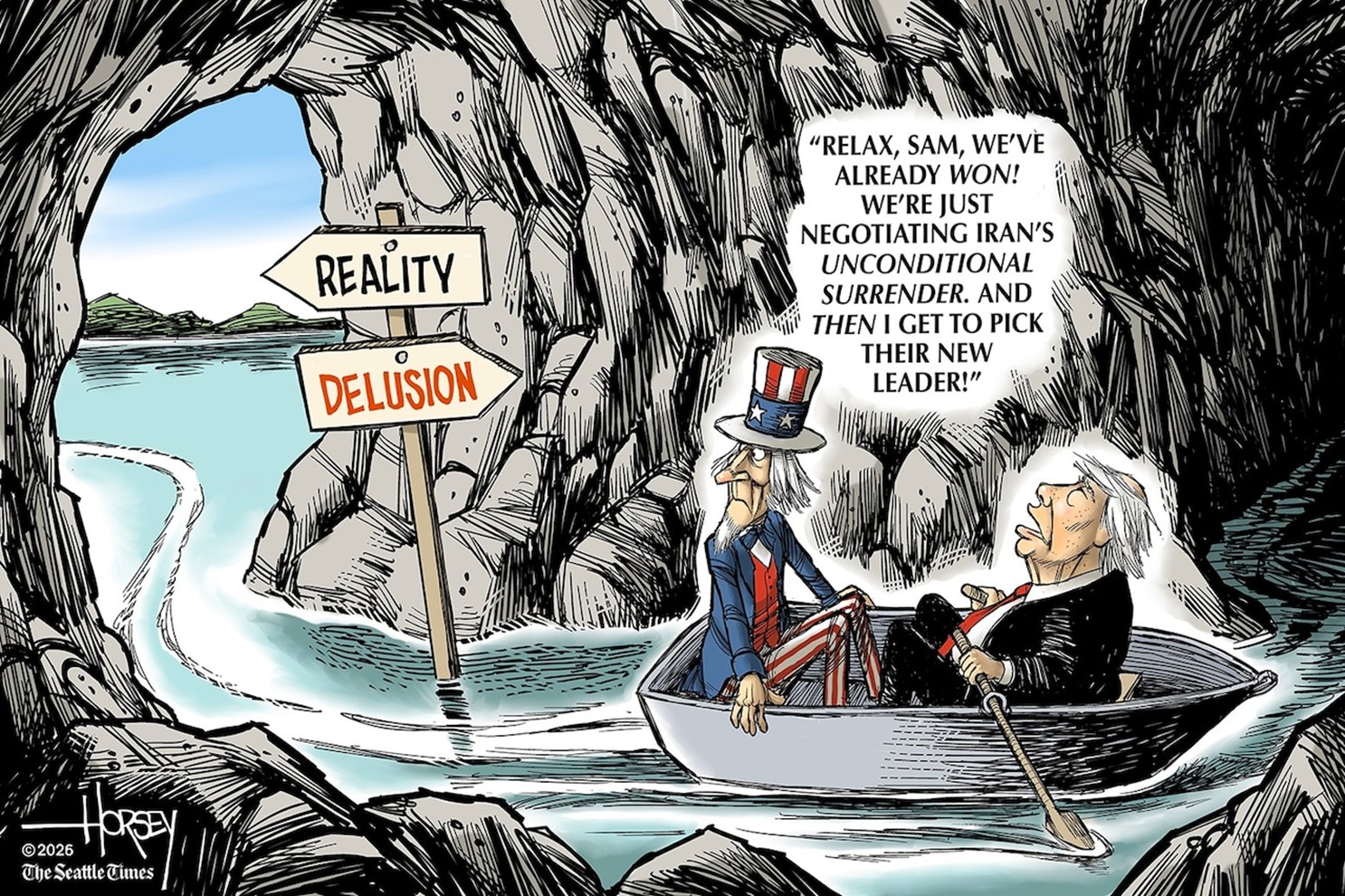
25 Apr Iran War; Autocrats; Claude Mythos; the Stock Market…
“Highs and lows of April 2026…, and thereafter.” – The Lonely Realist
TLR recently received a number of questions from readers. TLR’s responses follow:
Dear Mr. Realist: I’ve been reading a range of commentators’ analyses of the Iran War. Some are saying that President Trump has been pursuing the best possible strategy, one well-designed to defang Iranian aggressions and prevent it from having a nuclear weapon (e.g., “Debunking Seven Myths About the Iran War”), while others are saying that the Iran War doesn’t benefit America, the War was driven by President Trump’s mistaken belief that the Iranians would react in the same ways as the Venezuelans, and America started a War that it cannot win (e.g., “Iran is dangling its favorite kind of deal. Will Trump bite?”). Who is right?
TLR: No one knows. It’s all speculation. What is clear, however, is that the War will not resolve quickly or easily. Those who assert that they have answers simply are engaging in a polarized dialogue intended to increase their partisan attraction. Media naturally are using every twitch and turn to spin analyses that sensationalize their alleged insights and appeal to their audiences – and in doing so are manufacturing arguments to support conclusions based on outcome-determinative assumptions. The War’s outcome and consequences remain unpredictable.
Dear Mr. Realist: How likely is a satisfactory negotiated settlement of the War?
TLR: It’s possible, but unlikely in the near-term. Among other things, commentaries have been consistent in contrasting the irreconcilable positions of President Trump and the Theocracy with respect to Iran’s intention to develop nuclear weapon capabilities (e.g., a recent Wall Street Journal editorial).
Dear Mr. Realist: Does the Islamic Republic have the ability to hold hostage the global oil supply?
TLR: Pretty much “yes,” and it is capable of doing so for many months.
Dear Mr. Realist: Was President Trump’s recent unilateral extension of the ceasefire a TACO decision that evidences a Presidential intent to find an off-ramp?
TLR: That’s a possibility, but the President’s actions to-date make that an unlikely conclusion – among other things, history would treat it as an American defeat –, although the President’s motives are, as usual, opaque. What the extension most likely shows is that the President is unwilling to militarily escalate – he knows that further bombing would cause more damage to Iranian civilians than to the Theocrats and would trigger Iranian and Iranian proxies’ retribution on Gulf energy infrastructure, both of which are counterproductive. The alternative of putting boots on the ground is unacceptable. Such an escalation would cost the President both domestically and geopolitically and would commit America to an expanding conflict. He instead may be betting that an economic blockade can, over time, bring the Theocracy to its knees the table…, although that presupposes that the President is willing and America’s military is able to impose a tightening blockade on Iranian commerce (which thus far has had only limited success).
Dear Mr. Realist: Is it possible for Iran to be pressured sufficiently to give up its nuclear materials?
TLR: Although there is significant skepticism, many observers believe that it will have to. However, achieving that goal will take time and, despite President Trump’s pledge not to engage in a “forever war,” the Iran War is progressively taking on the indicia of such a war. A successful outcome that marks the end of Iran’s nuclear ambitions is an existential one for Israel because a nuclear-armed Iran spells the end of Israel, a goal the Theocracy has pursued for the last 47 years. Israel’s continued existence, however, is only one reason why America is determined to end Iran’s regional and nuclear threats – the U.S. cannot tolerate Iran repeating North Korea’s nuclear weapons and missile development. Iran is more strategically located and has been all-too-blatantly pursuing active anti-American policies, both directly and through proxies. The Iran War therefore will continue, regime change being President Trump’s ultimate goal (as TLR has observed). [ED NOTE: There are, however, potentially positive (as well as negative) realignments that may arise from an ongoing Iran conflict.]
Dear Mr. Realist: How could any “autocrat,” especially a prominent one like Viktor Orbán, lose an election?
TLR: The answer (as James Carville stated some 30+ years ago) is simple: “It’s the economy, stupid.” Mr. Orbán so significantly mismanaged the Hungarian economy that many of his supporters abandoned him.
Dear Mr. Realist: Anthropic’s new large language model, Claude Mythos, has been described by some as a measurable step towards creating a real-world Skynet (the AI villain from the 1984 movie The Terminator). What’s your view?
TLR: Mythos is a major breakthrough in AI intelligence having “evolved” faster than experts had predicted – and, yes, AI development can accurately be described as an “evolutionary process.” There are chilling parallels with the plot of The Terminator – after all, Arnold Schwarzenegger’s murderous cyborg was sent back to the past from 2029, 3 years from now. And yet The Terminator is only a horror movie (as well as a morality play) and not a window into the future. It’s not reality.
Dear Mr. Realist: Will stock market momentum continue to take prices steadily upward despite the potentially adverse consequences of the Iran War?
TLR: The consensus among analysts is “yes” (that is, “buying the dip” remains the currently-favored strategy). GDP growth projections for 2026 continue to exceed 2% – the IMF projecting 2.1%, the Federal Reserve 2.4%, Morgan Stanley 2.2%, and JP Morgan 2%. Both Morgan Stanley and JP Morgan also are predicting that the S&P 500 will show earnings growth of >13% through the end of 2027. Other market pundits generally agree, with one leading economist adding that “despite ongoing public concerns about gasoline prices, the U.S. consumer is in better shape than sentiment surveys indicate. Inflation-adjusted gasoline prices aren’t nearly the burden they were 5 years ago, 10 years ago, even at the ’08 peak. Furthermore, the war is stimulating the economy, with improvements in earnings estimates and the jobs report serving as evidence of underlying strength and with the American market the premier growth index for global investors seeking opportunity. The U.S.’s relative position has really been strengthened by what’s been exposed by supply chains through this war, which is combining with continued American leadership in tech, healthcare, and fintech innovation.” There are, of course, those who hold dimmer views…, which is what makes a market.
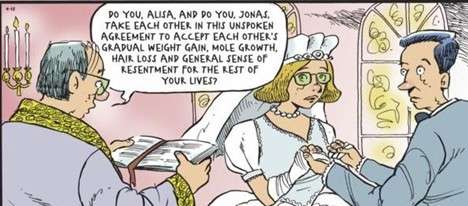
Finally (from a good friend)

No Comments