


12 Mar The Iran War
“Is the Iran War a terrible mistake or a brilliant geopolitical gambit?” – The Lonely Realist
Thomas Paine in 1776 said: “These are the times that try men’s souls.” Wars do that.
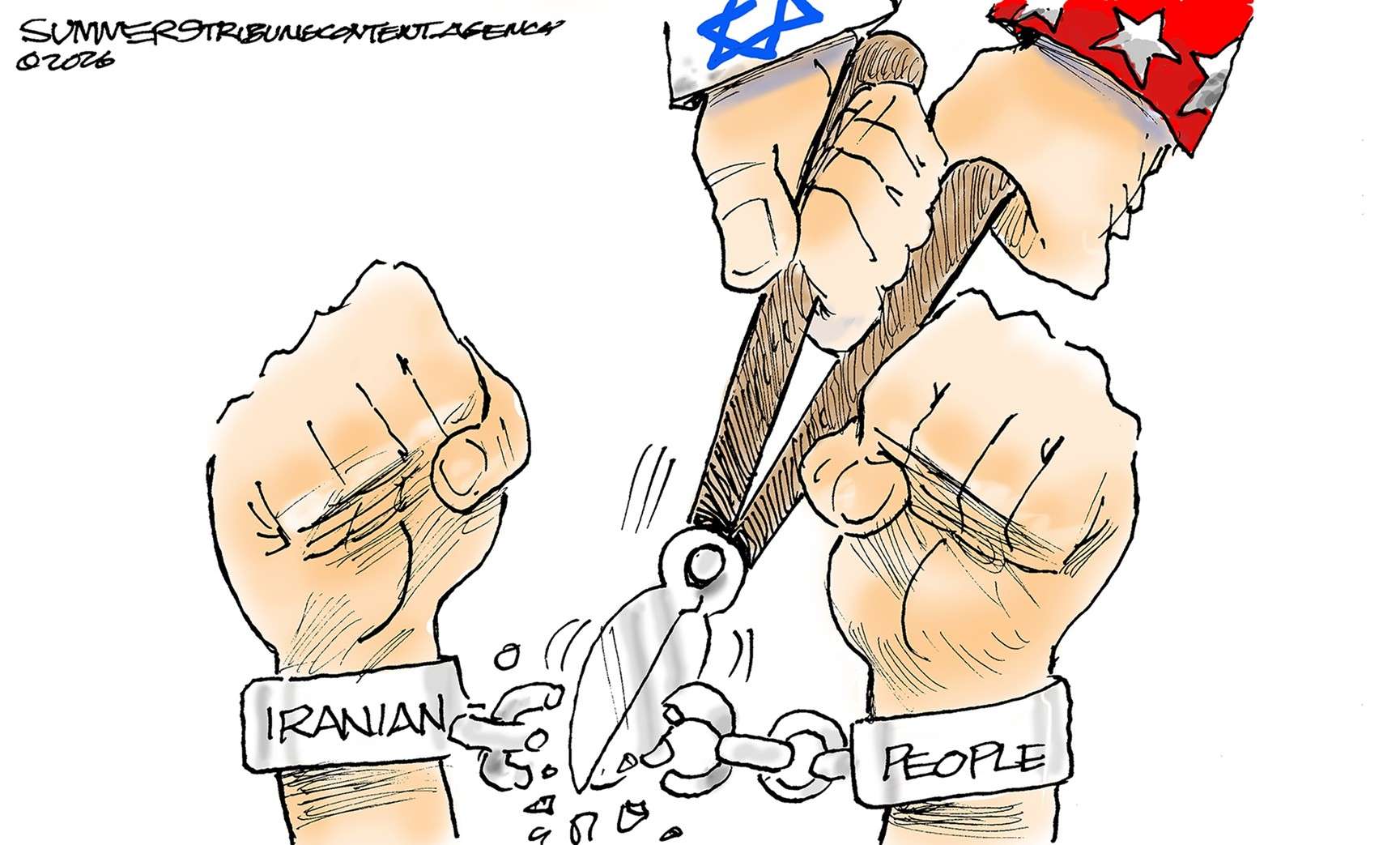
What happens to Iran and the Middle East after America’s and Israel’s bombing campaign ends? Who will run Iran’s government, sign treaties, and ratify arms control agreements…, if there are any? Who will oversee those treaties and agreements and enforce regional security? Will it be Israel? Turkey? Saudi Arabia? America? The U.S./Israel bombing campaign can have one of three outcomes. The first is that the Iranian people take up arms, overthrow the “Islamic Republic,” and create a new government (with a consensus leader) that is satisfactory to Israel, Turkey, Saudi Arabia and America. The second is that they don’t, the “Islamic Theocracy” survives (under a Mojtaba Khamenei monarchy) and continues to be a source for global terrorism and Middle East instability as well as a participant in the China/Russia/North Korea/etc. anti-American Axis. The third possibility is chaos.
Opponents of the Iran War see the latter as the likely outcome. Some decry the President’s failure to comply with the War Powers Act. Others believe that America is making the same miscalculations today that resulted in debacles in Vietnam, Iraq and Afghanistan. However, drawing analogies from those historical “boots on the ground” commitments are inapposite. America’s mistakes in Vietnam, Iraq and Afghanistan took place during different eras and involved different motivations, enemies and geopolitical objectives. Do these differentiations make the Iran War a good idea? They do not. But they also don’t make it a bad idea. The reality is that it’s too soon to reach a judgment. It’s also not possible to determine whether the bombing of Iran will eliminate Iran’s threat to Middle East stability. Both the internal reaction of Iranians and the external fallout from the bombing campaign are unknowable…, which provides some justification for President Trump’s equivocations concerning the reasons for launching the War and the goals America is seeking to achieve. The multiplicity of President Trump’s rationales provides the President with the political latitude to pair the outcome with an ex post facto rationale based on the relative success (or failure) of the campaign. The President nevertheless has set a high bar, demanding the Islamic Regime’s “unconditional surrender” – but then, as the President’s Press Secretary “clarified”: “What the President means is that when he as commander in chief of the U.S. armed forces determines that Iran no longer poses a threat to the United States of America and the goals of Operation Epic Fury has [sic] been fully realized, then Iran will essentially be in a place of unconditional surrender whether they say it themselves or not.” Exactly.
Opponents of the War (as well as opponents of the President) see these Trumpian hedges as a sign of disorganization, a demonstration of the absence of a cohesive strategy and an endgame plan. They note that Iran is a diverse country of 92 million people with ethnic Persians the majority, Azerbaijanis at 14–24%, Kurds at 7–10%, and Lurs at 6%, along with smaller percentages of Gilakis, Mazandaranis, Arabs, Baloch, and Turkmen. They reject the analogy to NATO’s successful 1999 bombing campaign against Yugoslavia that ended ethnic cleansing in Kosovo, and ask what America would do if a power vacuum develops in Iran and how it would affect Iran’s Middle East neighbors. Criticisms run the gamut: It’s “a betrayal of the American people” per Elizabeth Warren, and a betrayal of MAGA principles according to Marjorie Taylor Greene.
Supporters of the Iran War see things differently. They point to the destabilizing realities of Iranian foreign and domestic policies, the treatment of America as “the Great Satan” and of Israel as the “Little Satan,” and the consequent waging of wars against Americans and Israelis over the past 47 years. Iranians seized the American embassy in 1979, arranged the bombing of American troops in Beirut in 1982, supplied weapons that killed American soldiers in Iraq, and have sought the assassinations of John Bolton, Mike Pompeo and Donald Trump. Iran has sponsored and funded anti-American terrorist organizations throughout the world – most notoriously in Lebanon, Syria, Gaza, Yemen and Iraq – for the purpose of undercutting the interests of America and its allies. It has continually pursued the building of nuclear weapons and their delivery systems, is a significant supplier of drone weaponry to Russia (that same Russia that now is giving Iran targeting data to use against the U.S.), and is a standard-bearer of the Axis of the Sanctioned. It had the opportunity to improve relations with America many times over the last 47 years, most recently after last year’s destruction of its nuclear facilities. It has consistently rejected doing so.
The Islamic Republic represents autocratic rule by a theocracy dedicated to regional domination. It has employed a broad-based strategy of anti-American/anti-Israel “from the river to the sea” militarism…, coming ever-so-close to achieving its goals. Given these core Iranian objectives, preventing Iran’s nuclear program from achieving success alone provides a justification for the Iran War. Is there any doubt about what the ayatollahs would do if they had nuclear weapons?
Yet acknowledging the risk of a nuclear-armed Islamic Theocracy leaves unanswered the question of how America and Israel will achieve President Trump’s goal of regime change. America’s plan apparently is a permutation of its Venezuelan strategy. The first step in that plan is to defang the Islamic Revolutionary Guard Corps (IRGC), the Islamic Regime’s elite military force that has more than 125,000 personnel and controls all military and core business aspects of Iran’s government and economy, as well as the 90,000-member paramilitary, the Basij. America’s and Israel’s bombing campaign has been directed at the IRGC’s leadership, arsenals, barracks, businesses and personnel. The second step will require decapitating the Islamic Republic’s remaining autocracy. That will require elimination of Mojtaba Khamenei and members of the council that appointed him (as well, perhaps, as their successors). The final step will involve the capture and occupation of Kharg Island and require America to place “boots on the ground” and accept the consequent military casualties. Because Iran’s leadership and the IRGC/Basij are funded by Iran’s crude oil exports, 90% of which flow through Kharg Island, cutting off those exports would mean that the government no longer would have the means to pay the IRGC/Basij or government employees and, accordingly, would lead to the collapse of Iran’s currency and leave the Islamic Regime with no way to fund operations. If America were to succeed in its three-step strategy, it would anticipate an uprising to then topple the Islamic Theocracy. Failure of any such uprising, or the failure of any American step, would mean chaos, with the IRGC in the best position to impose order and continue the ayatollahs in power. And, yet, even such chaos might be an acceptable outcome for the Trump Administration because, once it occupies Kharg Island, America will have increased its leverage over the global oil and gas supply.
We all await further developments.
Finally (from a good friend)


No Comments