


21 Nov What’s Going On?
“Nothing to see here.” – The Lonely Realist
In the last few weeks, the American public has been made keenly aware of cybersecurity weaknesses, Iranian threats, rising AI consciousness, and global challenges posed by China, Russia and North Korea. As a consequence, Americans have been stocking up for Winter, with Costco’s CFO recently telling Bloomberg that consumers, apparently driven by a series of major tech outages and enflamed by social media, are stocking up on emergency essentials, and that 21 of its 26 “high-ticket generators” now are sold out.
What’s going on?
These days, even a casual glance at the media invites alarm. Whether on the mainstream or social media, there are dire warnings that America is, was – or soon will be – under cyberattack. November 12th saw disruptions to Microsoft Outlook and Teams. On November 13th, the Federal Aviation Administration halted flights across the country with a ground stop that lasted 4-1/2 hours and resulted in the cancelation of >20,000 flights. On November 16th, customers at major U.S. banks were locked out of their accounts for hours, there were flight disruptions at United Airlines, and Optimizely’s website testing service suffered a supply-chain breach that affected 178 organizations. There’s more! November 17th saw outages on America’s National Security Agency network, on Apple and on some weather.gov sites with the FBI thereafter issuing a “FLASH” warning against threat actors abusing ARTEX (an offensive/testing framework) to automate reconnaissance and attack, and U.S. intelligence reportedly addressing Iranian plans to explode a dirty bomb in Washington. The compressed timeframe of these (seemingly unrelated) threats and disruptions sparked conspiratorialists to speculate about coordinated cyberattacks. In response, on November 18th, Department of Homeland Security Secretary Mullin, Director of National Intelligence Clayton, and FBI Deputy Director Raia testified before the House Committee on Homeland Security in an effort to assure both Congress and the public that all is well, affirming that there is no evidence of a cyberattack or of malicious actor coordination. They instead attributed the sudden rash of cyber-issues to routine system upgrades and patching of vulnerable infrastructure. Assuming that they are correct, these last few weeks provide a foretaste of the fallout to be expected from evolving AI, which necessarily will reveal increasing vulnerabilities that require software upgrades and consequent disruptions, including the clustering of outages.
Meanwhile, the Nvidia scandal has been disrupting the corporate and financial worlds. On October 29th, the NYT shone a bright red light on Jensen Huang, the CEO of Nvidia, “outing” him for having an extramarital affair with an alleged Chinese spy. Soon after, the media reported that Huang also had had extramarital affairs with two Nvidia employees. These cumulative disclosures led to Huang’s resignation on November 12th. [ED NOTE: Having three extramarital affairs, two with corporate subordinates and a third with a Chinese spy to whom Nvidia was selling high-end chips, violates any number of public company standards…, although that does not mean that Huang is out-of-the-running for a continuing role at Nvidia.] The resulting scandal adversely impacted the price of Nvidia stock…, as well as the broad stock market (with Steve Eisman suggesting that neocloud stocks now are in “big trouble”). Nvidia is the world’s most important producer of chips and networking systems for advanced AI models and, until late October, also was the most valuable company in the world. It no longer is, despite reporting record earnings and providing upbeat 2027 guidance on November 18th.
Huang’s Chinese spy connection did not come as a surprise to America’s government. It had known for more than a year that Huang had a paramour who likely was a Chinese spy. During that period, at Huang’s urging, the President nevertheless eased export restrictions on Nvidia chip sales to China (in return for the U.S. government receiving 25% of proceeds). Nvidia also received permission to sell almost $5 billion of Nvidia’s chips, including its high-end H200, to the China-front company run by Huang’s paramour. These latter sales occurred after the President had twice been informed about the Chinese spy connection, first in the Fall of 2025 and again in May 2026. President Trump nevertheless has said that he did not know of Huang’s China connection until “not too long ago” and that the U.S. has not determined whether Huang’s paramour, indeed, is a Chinese spy.
But there’s more! The Nvidia scandal has significant geopolitical consequences and also heightens internal government intrigue. The NYT’s story reportedly arose from a leaked memo prepared for Secretary of State (and National Security Adviser) Marco Rubio. Secretary Rubio is a China hawk in an Administration that has leaned towards China accommodation. The Huang scandal has reversed that lean and, with it, American chip policy towards China. The Huang scandal therefore presages a toughening of the relationship between America and China [ED NOTE: Recalling Graham Allison’s “Destined for War” and its analysis of the “Thucydides Trap”] and also frames what is likely to be a heated tug-of-war between Administration hawks and doves. (An important additional consequence may be a stunting of American AI development, which depends in no small part on the popularity of AI companies.)
Further instability flows from the Iran War. Mohammad Ghalibaf, Iran’s Parliamentary Speaker, recently threatened that Iran “will not remain in a state of ‘neither war nor peace.’” Military analysts believe that the Islamic Republic cannot survive two more years of American pressure and sanctions. Iran therefore is motivated to take action sooner rather than later. The first sign of escalation came on November 17th when Iranian drones attacked an American radar system in Bahrain. In response, U.S. warplanes bombed an Islamic Revolutionary Guard Corps missile site on Qeshm Island, after which Iran targeted US drone and missile sites in Kuwait.
Meanwhile, Saudi Arabia is fighting the Houthis; Israeli politics and policies are in flux; Gaza remains an unsolved problem; the Ukraine War and wars in Africa grind on; North Korean hackers continue to hone their skills; and Europe is facing right-wing, pro-Russia election outcomes. From an economic perspective, the Dollar is sky-high, precious metals are plunging and stock markets are feeling the pain, with a leading analyst wondering: “It’s clear that the sharp rise in the Dollar has totally decoupled from the rate differential, so dollar strength is NOT about the hawkish Fed. That can be a sign that something else is going on, i.e., something is breaking.”
It therefore is no surprise that retailers are seeing record sales of doomsday essentials. There’s a lot going on!
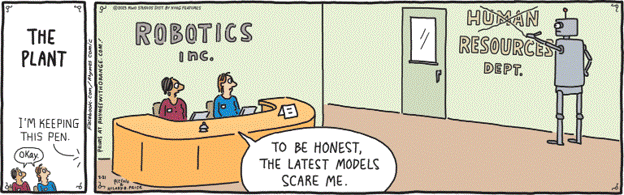
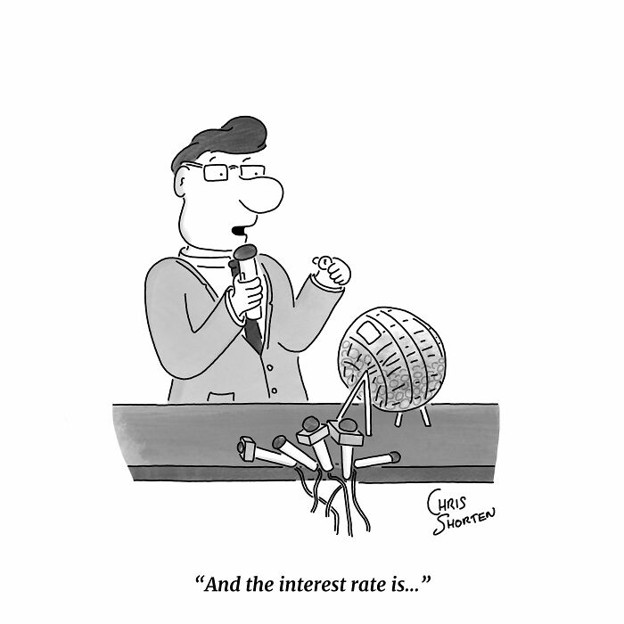
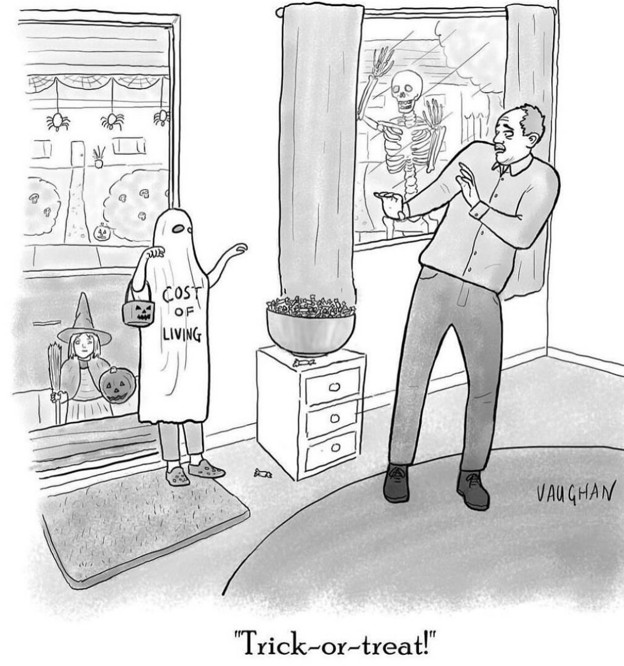
Finally (from a good friend)
No Comments