

07 Nov America is Betting The Farm (including your farm) on AI
“What could go wrong?” – The Lonely Realist
America’s economy is flying…, or is it? America’s stock markets are uncertain. China’s economic juggernaut is dominating global markets…, or is it instead strangling China’s domestic economy? China’s stock markets are decidedly negative.
TLR discussed America’s “Affordability Crisis” in May and in August highlighted America’s “Debt Meltdown.” There has not been any measurable improvement in either. The U.S. today is carrying national debt of $40.6 trillion – and increasing that amount every minute of every day. Deficit spending has reached 6%/year, the highest percentage in America’s history (outside of recession or war). That debt and those deficits are causing Dollar debasement that history teaches leads to an unhappy ending – that is, an inevitable fiscal crisis (a process explained by Ray Dalio in “How Countries Go Broke”). Treasury Department actions this past August make it clear that the Treasury Department is aware of the danger. It also is aware that the consequent erosion in the value of the Dollar is significantly contributing to American inflation. “Be Careful What You Wish For” was TLR’s 2019 alert about Dollar debasement concerns. The consequences of a weakening Dollar were further explored in October 2025 in TLR’s analysis of the origins of fiat currencies which, after all, consist of mere pieces of paper. Those pieces of paper draw their value from people’s faith. The Dollar’s value is based on America’s strength evidenced by its economic and foreign policies, its judicial system, its Constitution, and its Rule of Law. Weakening that faith results in a weakening Dollar…, and that faith has been noticeably weakening.
While America is facing affordability, debt, deficit and Dollar problems, China is experiencing housing, business and employment crises. China has 8.3 billion square meters of fully-paid-for but uncompleted commercial properties in addition to 65-80 million vacant apartments…, which means that perhaps 20% of all homes in China are empty…, and explains, in part, why 64 property developers have defaulted on or restructured their debt over the last few years. Youth unemployment in China sits at 18% and is expected to remain stubbornly high for years to come. Sluggish consumer demand has been combining with hyper-intense domestic business competition to create massive state-financed overcapacity and a cycle of zero-sum rivalry that has (yet) to reveal clear winners and punish losers (so-called “involution”). As a consequence, profit margins at Chinese companies are approximately one-half the average of global competitors with perhaps 30% of Chinese industrial firms currently losing money. Much like America following the Global Financial Crisis, China has been printing money in an effort to mitigate the economic fallout. That has not been a solution for China’s declining economic growth. Doing so has not reconciled China’s overbuilt housing market, or helped it to absorb Taiwan (thereby completing a successful takeover of TSMC and its ~70% global semiconductor production), or resolved the oil crisis sparked by the Iran War, or enhanced China’s ability to support a worldwide network of allies (including Russia in its war with Ukraine), protectorates and clients.
Both the U.S. and China have continued doing what they’re doing with the belief that the growth of debt as a percentage of GDP is unimportant. History says otherwise. America’s and China’s debt and the growth of their debt have reached unsupportable levels. Both countries nevertheless continue to operate with the hope that they can inflate their way out of their problems by kicking a variety of economically toxic cans down the road. They are mistaken. The fact is that the U.S. and China may have reached a tipping point that can be avoided only if each country’s AI-driven industries are able to realize the highest expectations of growth and productivity. If not, both countries are facing massive disruptions and an adverse, radically re-ordered world order. The reality is that realization of maximalist AI expectations depends on data center build-outs that are necessary to both create and enhance industry dominance.
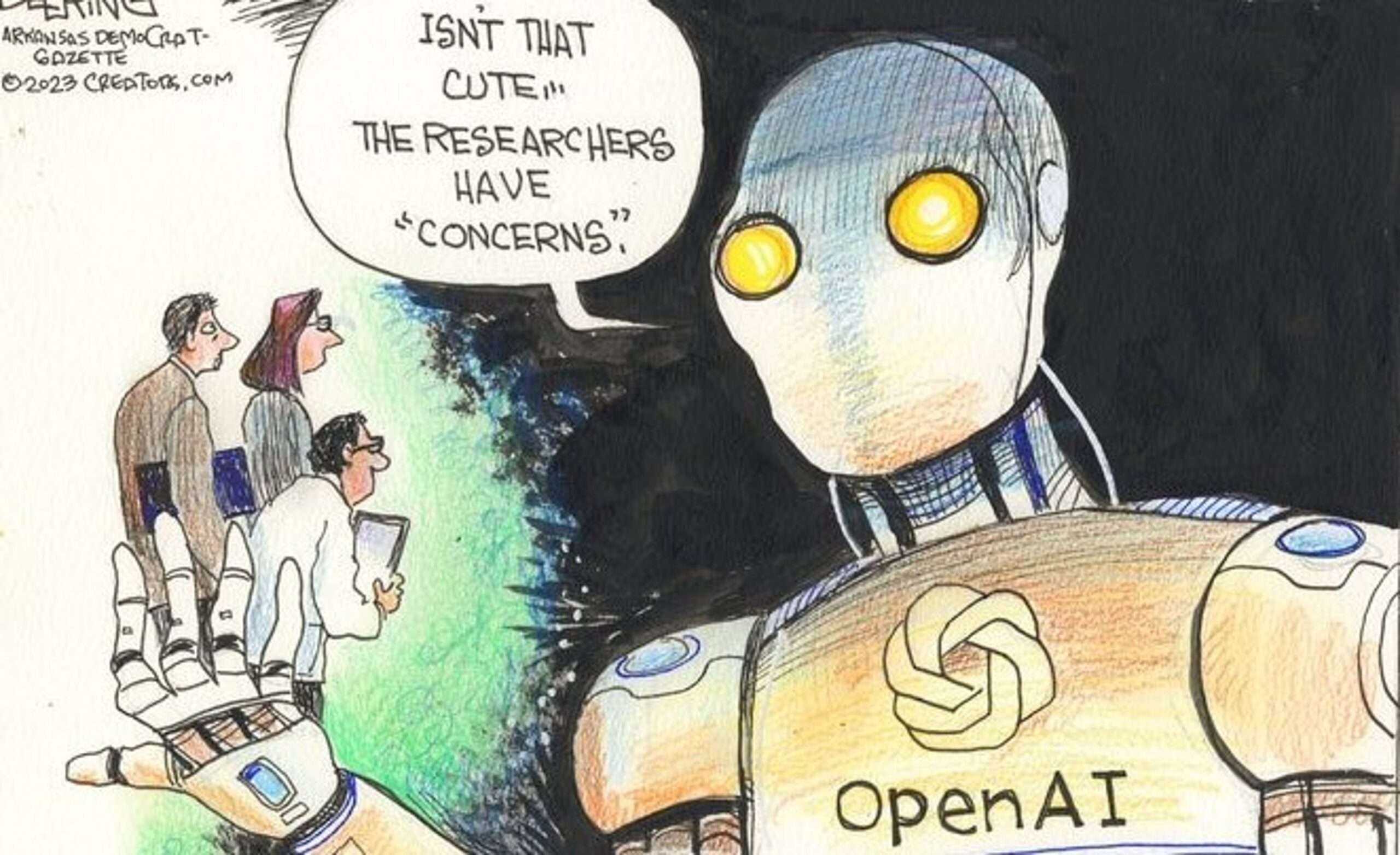
Although the U.S. currently leads the world in data center construction having completed over 5,000 data centers (>40% of the global total), China is intent on catching up (and other countries are intent on becoming AI competitive)…, with its centralized policy- and decision-making being pitted against America’s diffuse state and local governance. Of concern is that this past week’s Midterm elections resulted in victory for virtually every major local ballot initiative that opposed data center construction. Moreover, governors of several states that did not vote on data center questions have promised to impose constraints of their own on new builds. Although this will not impact on centers scheduled to go online in 2027, it will affect the 96 GW of data center capacity scheduled to go online in 2028. Of similar concern is Federal legislation being proposed by Congressional Democrats to limit data center construction on a national level. The speed at which the anti-AI, anti-data center, anti-AI-driven layoff movements have emerged in America is likely to significantly reduce America’s development of AI and adversely impact its AI creative industries. Although legislation to rein in the AI buildout at the national level appears likely to fail in the face of Presidential vetoes, the fact that Democrats have a majority of governorships is likely to constrain data center construction and AI development. For example, incoming Texas Governor Gina Hinojosa ran on a platform calling for a moratorium on new data center projects, at least until protections are established for electricity supplies, water resources, and local communities, and that’s in Texas, a state that accounts for >25% of planned 2030 capacity.
If America’s affordability, debt, deficits and Dollar problems truly require a maximalist AI outcome in order to avoid a Ray Dalio-type debacle, this past week’s election outcomes bode ill for America’s future. Electoral outcome concerns apparently infected the stock market this past Thursday, resulting in a Nasdaq Composite decline of 5.5%. That decline also was triggered, at least in part, by the realization that AI-related debt borrowed by America’s AI champions itself carries massive risk. That debt soon will exceed $3 trillion, quite a burden when added to >$40 trillion of Federal government debt coupled with AI pushback from both voters and newly-elected governors. What could go wrong?
Finally (from a good friend)

No Comments