


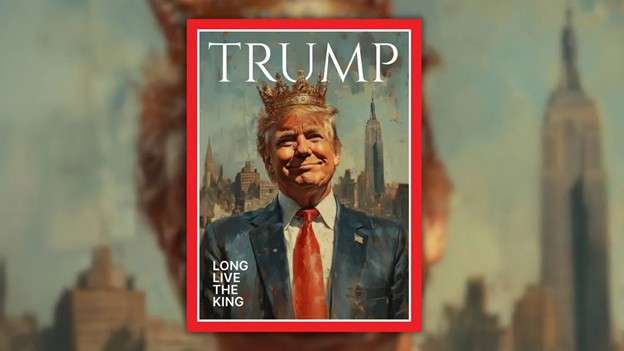
11 Jul The Supreme Court and the Imperial Presidency
“Change has come to America’s democracy.” – The Lonely Realist
Arthur Schlesinger’s 1973 book, The Imperial Presidency, concluded that the Constitution provides no real limits on Presidential power. He was right. A 6-3 Supreme Court majority on June 29th in Trump v. Slaughter endorsed the “unitary executive theory” (the one advocated in Project 2025), expanding the President’s already extensive powers by empowering exclusive Presidential control over the leadership, and therefore [apparently] the staffing, policy decisions and enforcement priorities, of Federal agencies. Welcome to America’s Imperial democracy! The Court’s holding was grounded in what the Court’s majority viewed as the plain wording of the Constitution whereby Congress has the legislative powers enumerated in Article 1 to make laws and the President has the executive powers broadly described in Article 2 to “take Care that the Laws be faithfully executed.” In a separate holding the same day, a 5-4 majority in Trump v. Cook made an exception with respect to the Federal Reserve, concluding that “monetary policy [is not an Executive function and therefore] should not be subject to [Presidential] interference.”
Commentators who oppose vesting Imperial Power in a President have decried the Court’s Slaughter decision, arguing that “no other president in almost a century has possessed the ability to fire every independent commissioner in the executive branch at will [and] usher in momentous changes in the powers of the presidency, and with it, the potential for abuse of presidential power.” [ED NOTE: Presidents over a Century ago believed they had such authority, but did not exercise it to the extent proposed by President Trump.] “Originalist” commentators have endorsed the Court’s Slaughter decision on the basis that “Congress lacks constitutional power to restrict the president’s removal of officers … and [Federal agencies] have not been meaningfully independent for decades.”
The Court based its decision in Slaughter on a literal, though legally debatable, reading of the Constitution. Those who disagree question whether the Court ought to have so strictly, and partisanly, parsed the Constitution’s words and whether the Court had sufficient justification to overrule its 1935 precedent (Humphrey’s Executor v. U.S.) that held that the Federal Trade Commission (FTC) – the agency in the Slaughter case –, had been exercising “quasi-legislative” and “quasi-judicial” functions and thereby was not subject to exclusive Presidential authority (the Court in Slaughter finding that the operations of the 21st Century’s FTC are distinguishable from its 1935 counterpart). The fact that the President had appointed three of the majority’s Justices who previously had professed a shared understanding of the Constitution does not invalidate the Court’s decision. After all, Article 1 of the Constitution enumerates the powers delegated exclusively to Congress and those powers do not include the power to preclude the firing of Federal agency employees. What they do include are the power to tax and spend, borrow, declare war, [etc.], and “make all Laws which shall be necessary and proper for carrying into Execution the foregoing Powers, and all other Powers vested by this Constitution in the Government of the United States, or in any Department or Officer thereof.” The Court could have treated the latter power as determinative. It did not. Had Congress provided a narrower scope in drafting the laws that govern Federal agencies or in the use of monies allocated to them, doing so could have provided the Court with a clear basis to hold the President to their standards. It had not. As TLR has often observed (e.g., here, here and here), Congress this Century has refrained from exercising its Article 1 powers and has thereby ceded progressively greater powers to the President (for example, Congress has failed to reject Supreme Court nominees who were appointed not for their legal acumen but for purely political reasons…, and also has passively affirmed virtually all Presidential appointees; it has avoided increasing taxes to pay for government operations without Presidential approval; it will not consider decreasing entitlements to effect a balanced budget without Presidential approval; it has allowed the President to carry out wars without its approval; and it has refrained from preventing intrusions into a host of Article 1 powers which, among other things, have allowed the President to issue and execute unConstitutional Executive Orders (including EOs dispensed by Presidents Obama, Trump, Biden and Trump)). The result is an American democracy that no longer operates with three co-equal Federal branches and, instead, now operates with a decided “Unbalance of Power.” The reason for such Congressional non-action is that members of Congress have prioritized their re-election over their Constitutional responsibilities. The gradual – and consistent – increase in executive power and control over America’s laws, law enforcement, war powers, composition of the judiciary and public and private institutions is the inevitable result of that Congressional retreat. For those who believe that America’s government is malfunctioning, much of the blame falls on Congress.
President Trump carefully planned for this outcome. He invested substantial time and effort during the four years he was out of office to construct a legal and operational strategy designed to maximize unilateral Presidential decision-making. The result was Project 2025, a well-researched, step-by-step plan that led to a string of Presidential actions and consequent Supreme Court decisions culminating (to date) in Slaughter. The President now is empowered to fire regulators and appoint partisans, removing both Democrats and Independents from the Federal government. He already has more than hinted at his intentions by firing the Democratic appointees to the Election Assistance Commission.
TLR wrote last November that President Trump would become American democracy’s Greatest Disrupter. His “Imperial Presidency” finds support among those who favor near-monarchical national leadership as well as those who believe that the role of America’s President is to serve as “Philosopher King” (as described in Plato’s Republic) and accordingly represents a step forward in America’s democratic evolution. Those who believe that American democracy works best with three co-equal branches of government view Slaughter as a return to a pre-Enlightenment era.
Whatever the consequences of Slaughter, the Court’s reasoning leaves unanswered a critical question raised by Justice Gorsuch in his concurrence – that is, whether Congress’s practice of delegating broad rulemaking authority to Federal agencies is an unConstitutional grant of legislative authority to the Executive Branch. If so, that would nullify “legislative regulations” (and challenge many interpretative ones), severely disrupting virtually all government functions (while providing lawyers with virtually limitless paydays!). Stay tuned.
[ED NOTE: In Federalist #47, James Madison wrote: “The accumulation of all powers, legislative, executive, and judiciary, in the same hands, whether of one, a few, or many, and whether hereditary, self-appointed, or elective, may justly be pronounced the very definition of tyranny.”]
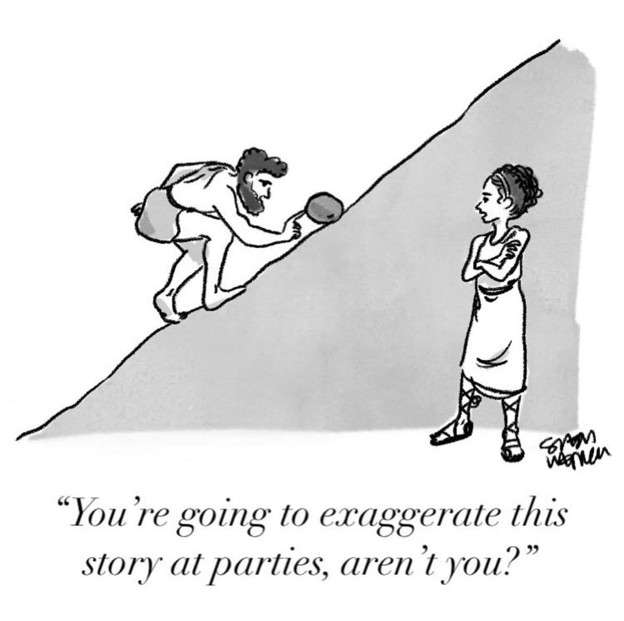
Finally (from a good friend)


No Comments