

29 Aug The Debt Meltdown
“Facts are stubborn things.” – John Adams
As many commentators (including TLR) have been highlighting, the U.S. is carrying an enormous national debt (recently breaching $40 trillion)…, one that is increasing day-by-day due to deficit spending that totals $2 trillion/year (resulting in a budget deficit of 6%, the widest ever outside recession and wartime). Debt and deficits have accelerated Dollar debasement, a developing fiscal crisis that Ray Dalio explains in his book, “How Countries Go Broke: The Big Cycle.” Treasury Department actions in August make it clear that the U.S. indeed is going broke and that it has breached a Dollar tipping point.
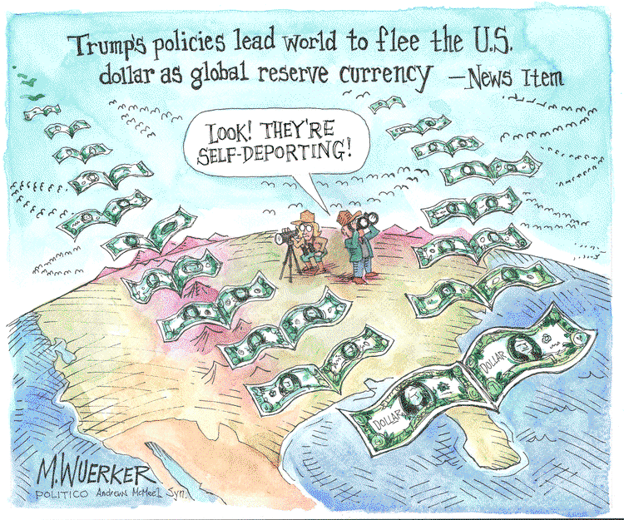
TLR has been writing about the eroding value of the Dollar (a principal cause of American inflation) for more than a decade. “Be Careful What You Wish For” was TLR’s 2019 alert and an early summary of TLR’s Dollar debasement concerns. As TLR wrote in March 2025, President Trump’s America First goal of a weakened Dollar that reduces the U.S. trade deficit and helps U.S. manufacturers and exporters has exacerbated the Dollar slide. Dollar debasement resonates with Hemingway’s cautionary description of the bankruptcy process: “[Dollar debasement] happens slowly…, then all at once.“ Yet, even without an “all at once” crash, a weakening Dollar has the consequences TLR outlined in October 2025 in its commentary titled “Is President Trump’s Dollar Wish Coming True?”, where TLR reminded readers that Dollars are mere pieces of paper without intrinsic value, the Dollar drawing its strength from people’s faith in America’s economic and foreign policies, its judicial system, its Constitution, and its Rule of Law. Weakening that faith results in a weakening Dollar. That’s one of the concerns expressed by Ray Dalio in an August 21st commentary entitled “How Countries Go Broke: The Dynamic Behind What is Happening Now.” He believes that a Debt Meltdown has begun, that Scott Bessent, the Secretary of the Treasury, understands this quite well, and that this has led Secretary Bessent to take unconventional (though inadequate) actions over the last few weeks to suppress interest rates (which Citadel Securities has labeled “financial repression”). TLR has been warning against precisely such an outcome for the past decade.
The genesis of Dalio’s August 21st post was, first, Bessent’s sale of Euros held in reserve by the Treasury Department in order to use the proceeds to buy Japanese Yen, doing so in partnership with the Bank of Japan in a (thus far) unsuccessful effort to prop up the Yen. If Treasury had not done so, Japan would have sold U.S. Treasury securities (Japan being the largest holder of those securities) to buy Yen, which would have put pressure on American interest rates and undercut the value of Treasury bonds. Two weeks later, after U.S. interest rates had soared to their highest level since 2007 (based in part on the market’s reaction to the Treasury Department’s purchase of Yen), the Treasury intervened in America’s bond markets by selling a small amount of short-term Treasuries in order to purchase long-term Treasuries (a “Treasury Twist,” the monetary policy equivalent of the Federal Reserve’s fiscal policy of Quantitative Easing used to suppress interest rates over the last 16 years). The Treasury Twist, unfortunately, has shown itself (at least so far) to be symbolic rather than sufficient to hold down long-term bond yields (with the Treasury thereafter doubling the amount of bonds that it indicated it could buy and, more recently, indicating that it might tap its ~$1 trillion General Account fund to increase purchases of Treasury bonds at the same time as the Federal Reserve is supporting Treasury action by continuing to buy $40 billion/month of short-term Treasuries).
What is apparent is that Treasury Secretary Bessent and Fed Chair Warsh (as well as the Bureau of Economic Analysis (BEA)) are coordinating their words and actions in a “Trump two-step” – that is, working to fulfill President Trump’s goal of suppressing interest rates and weakening the Dollar (as TLR’s resident oracle, Cassandra, predicted in July they would do). A day after Secretary Bessent announced the Treasury Twist, President Trump repeated his call for lower interest rates, stating that “25 years ago, when the country announced good numbers, interest rates went down because we had a stronger country,” his position being that those rates again should be lower because of America’s (and the stock market’s) strong performance. With the President, the Treasury Department, the Fed, and the BEA working in concert, Federal debt is ordained to increase, bond/commercial interest rates are destined to face growing pressures, and the Fed Funds Rate will remain under control…, all of which foretell a weakening Dollar. As JPMorgan’s James Sullivan observed, “Governments trying to control markets is not a particularly attractive story most of the time. It’s a little bit like paying your mortgage with your credit card. It can work for a while, but eventually the mismatch becomes more obvious.”
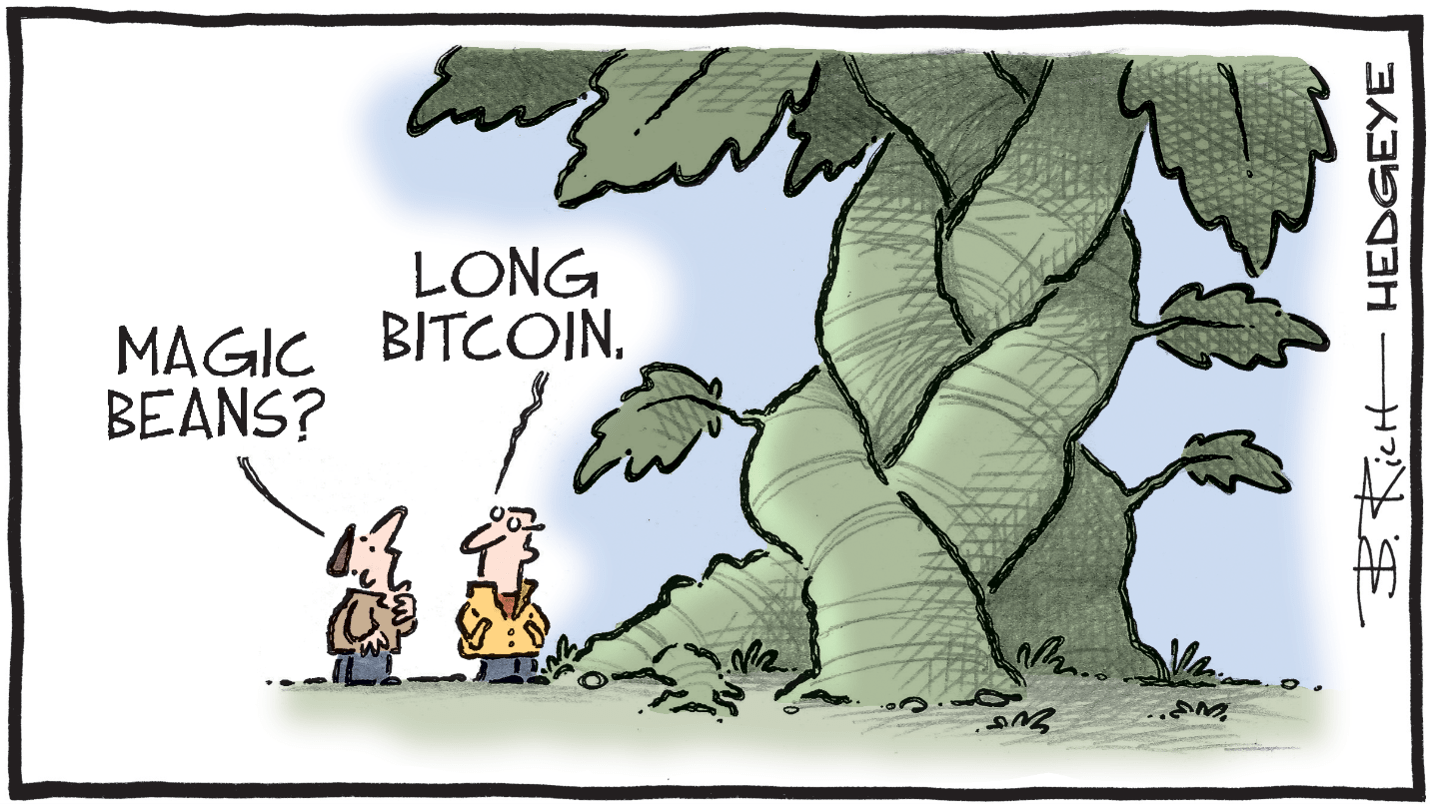
With the value of the Dollar fading, the value of stronger currencies necessarily will be increasing…, and that’s precisely what has happened so far. Gold and silver – “timeless stores of value and historical forms of money” – began their ascent immediately after the Treasury purchased Yen and accelerated their ascent after the Treasury announced its Twist. How high their price goes depends not only on Dollar weakness, but also on inflation, interest rates, global supply and demand, geopolitics, “black swan” events and, of course, perception (which President Trump, Secretary Bessent, Fed Chair Warsh and others are doing their very best to manage). Bank analysts are predicting a year-end gold price of ~$5,000, leading industry expert CPM Group is forecasting a progressively higher gold price (and an increasingly upbeat silver price) (readers can access Jeffrey Christian’s most recent presentation here), and Pollyanna-ish precious metals promoters are predicting a 10x precious metals price explosion…, while Mr. Dalio is counseling broad and carefully thought-out diversification with an overweight position in precious metals and Bitcoin (of “maybe 10-15%”).
Where might investors find a guideline? Renowned investor Stanley Druckenmiller believes that “The long-term Treasury yield is the most important price in the world. It is also the only fiscal disciplinarian the U.S. has left.” We shall see.
Finally (from a good friend)
Anonymous
Posted at 11:43h, 30 AugustFrom an anonymous reader: Now decades of interest rate suppression and the concomitant equity bubble have precluded and is precluding a market based normalization. If we let supply and demand and credit quality decide interest rates the whole system would self adjust but the adjustment would likely entail a repricing downward of almost every asset. No politician in the US or anywhere else will sign on to policy prescriptions that caused house prices and stock prices to decline by 40%. Also need gigantic fiscal adjustments that are politically impossible. Now just a bigger Argentina hoping devaluation can solve our problem.