


26 Sep MAGA Diplomacy
“MAGA’s approach to geopolitics is the international application of ‘The Art of the Deal’.” – The Lonely Realist
When it comes to foreign relations, the slogan “Make America Great Again” stands for prioritizing domestic interests over international ones…, often doing so by pursuing colonialism. President Trump’s 1987 book, “The Art of the Deal,” describes the strategies he employed against real estate adversaries in seeking to maximize commercial profitability by setting maximalist goals, using economic leverage to achieve those goals, acting unpredictably to keep friends and foes off-balance, and aggressively pursuing tactics to wear down opposition. The President’s foreign policy is a geopolitical spin on that strategy: he first threatens destruction and then offers bribes economic incentives to defuse those threats. If doing so doesn’t achieve his goals, he deploys sanctions and tariffs and, if those are unsuccessful and the context permits, the endgame is military force.
That playbook was brilliantly executed in Venezuela…, with stunning success. It also produced (at least so far) maximalist policy outcomes when directed at America’s NATO allies and trading partners. And the President’s further application of the geopolitical Art of the Deal to Greenland, Canada and Cuba is intended to cement American hegemonic control over the Western Hemisphere (the “Donroe Doctrine”). Unfortunately, that strategy has not found success in Iran, the Middle East, Ukraine or Gaza. The Art of the Deal worked well for the President in real estate contexts (as well as against weak international adversaries), but the Art of Geopolitics is more complex and nuanced when applied against well-armed opponents, requiring time-consuming diplomatic investment. The President’s focus is on achieving more immediate economic gains (for America as well as for the President’s family and friends). He therefore ignores the advantages of long-term international relationships and the benefits that accrue from 20th Century statesmanship.
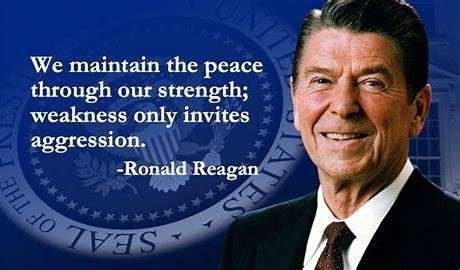
Interestingly, the President’s geopolitical agenda has excluded a role outside the Western Hemisphere for Marco Rubio, his Secretary of State and national security adviser, a dual post last held by Henry Kissinger. Secretary Rubio has not been involved in key negotiations, yet alone led America’s negotiating teams, with Iran, Russia, Ukraine, or China. Instead, Steve Witkoff, President Trump’s friend and real estate colleague, and Jared Kushner, the President’s son-in-law and private equity fund founder, are America’s go-to foreign policy negotiators. Although both are well-versed in The Art of the Deal, neither has a depth of knowledge or experience in foreign policy negotiations. Prior to Trump 2.0, Mr. Witkoff had not negotiated with any foreign government, and neither Mr. Witkoff nor Mr. Kushner previously had dealt with Iran, the leaders of which view economic considerations as tertiary to their continued hold on power. Nevertheless, it is Messrs. Witkoff and Kushner to whom the President assigned the task of reaching a nuclear disarmament agreement with Iran, this after America had launched an apparently fruitless a surprise attack on Iran’s nuclear facilities only a few months earlier. Their lack of experience might have been remedied by relying on the expertise of America’s nuclear arms and foreign policy specialists, but no such individuals were members of their negotiating team. That may have been why, although representatives from Oman and the UK who were present at the February negotiations between America and Iran thought that the nuclear weapons discussions were making progress, Messrs. Witkoff and Kushner concluded otherwise. They had offered Iran every possible economic incentive to forebear nuclear weapons development. The reality is that, without further non-economic concessions (as well as many more months of negotiations), America’s offer was not going to be accepted by the Iranian theocracy (recognizing that nuclear arms agreements necessarily are hard-fought over lengthy time periods). With the failure of economic leverage to achieve his goals, the President opted to use America’s superior military force to “close the deal,” catching both the Iranians and America’s allies off guard. Yet military force did not bring Iran back to the negotiating table. It instead resulted in the closing of the Strait of Hormuz and military retaliation that compelled America to counter, at first with a greater show of force and then with rhetoric and economic pressure intended to wear down Iran’s will. With the outcome remaining in doubt, it nevertheless is clear that the foreign policies pursued by Ronald Reagan (most relevantly through his strategy of “Peace Through Strength”) have been superseded by a MAGA geopolitical application of The Art of the Deal.
Similar Art of the Deal scripts are being played out in Gaza, Russia and Ukraine.
Resolution of the Gaza War is the goal of President Trump’s Board of Peace, which he formed (and chairs) to oversee the rebuilding of Gaza using capital inflows from the U.S., Saudi Arabia, the UAE and other Persian Gulf countries (although only ~30% of that budget has been promised to-date). (President Trump has noted that Gaza has terrific “oceanfront property” that could be made into the “Riviera of the Middle East.”) However, the prerequisites for Gaza peace (and deployment of the rebuilding fund) remain unfulfilled…, and there appears to be little prospect of that happening for some time (or, perhaps, at all). Hamas is refusing to comply with its commitment to disarm and Israel’s military consequently is not withdrawing from Gaza.
Mr. Witkoff has visited Russia seven times and Mr. Kushner three times in their efforts to persuade Vladimir Putin to commence peace talks with Ukraine. Their offer reportedly includes significant business and economic bribes incentives (including to Putin himself), but Putin has refused offers of a temporary ceasefire and held to his demands for de facto Ukrainian capitulation: Ukraine would be required to accept Russian sovereignty over all disputed territory (including the >20% of Donetsk that includes the “Fortress Belt”), withdraw its military from all contested areas, and drop requests to join NATO, all of which would render Ukraine defenseless against subsequent Russian aggression. In addition, the EU and America would be obligated to eliminate their Russian sanctions (a requirement that the Trump Administration reportedly has agreed to…, for a price). Interestingly, Messrs. Witkoff and Kushner have visited Ukraine only once and the U.S. has not offered Ukraine requested military assistance. The U.S., moreover, has refrained from threatening Russia by holding out the potential to provide advanced military technology to Ukraine. Ukraine’s prospects therefore remain fraught.
Meanwhile, Bloomberg reports that Mr. Witkoff earned $107 million in 2025 and, according to Yahoo Finance, Mr. Kushner’s net worth exceeded the $1 billion mark for the first time in 2025. President Trump’s 2025 earnings of >$2 billion have been widely reported. The economic benefits of The Art of the Deal apparently flow in multiple “geopolitical” directions.
Finally (from a good friend)



No Comments