


22 Aug Al Qaeda and the Decline of the American Empire
“Credit America’s setbacks to Osama bin Laden.” – The Lonely Realist
The Atlantic earlier this month published an analysis by Graeme Wood entitled “Did Al Qaeda Succeed?” Mr. Wood concludes that Osama bin Laden’s plan to weaken America by attrition was successful…, which is the same conclusion reached more than 6 years ago by TLR in the commentary entitled “America’s Victory … or Al Qaeda’s?”
As TLR wrote on June 7, 2020, Osama bin Laden’s plan was not simply to execute a notable terrorist event, though he did. Targeting the World Trade Center was a means for realizing his goal of toppling America as global hegemon, not the goal itself. The Twin Towers were a symbol of America’s stature. Its location placed it at the center of Western finance and civilization. Yet, the 9/11 attack itself was more than merely symbolic. The fall of the Towers sent a message about America’s vulnerability and financial fragility. Its successful execution rattled all of America and therefore required both retribution and affirmative steps to assure Americans against future domestic terrorist acts. America responded excessively.
The reverberations from 9/11 propelled the U.S. into almost 20 years of war in Afghanistan that, in the end, left America the loser…, and on multiple levels. The Afghanistan War led to the creation and spread of terror groups, the disintegration of order, balance and alliances across significant parts of three continents, and the displacement of millions. It resulted in the U.S. waging its War on Terror on a few tens of thousands of anti-American terrorists and on multiple fronts, fighting separate wars against Al Qaeda, ISIS and other non-state-sponsored Islamist extremist organizations … and sucking America into a catastrophic invasion of Iraq that created a costly multi-year military entanglement and, significantly, expanded Iranian regional influence (a war that, in the words of Zbigniew Brzezinski, was “unnecessary, self-damaging, demoralizing, delegitimizing, and governed primarily by simplistic military assumptions….”) [ED NOTE: which brings to mind 2026 Iranian analogues]. It also led the U.S. to impose a series of “homeland security” systems and intrusive security laws, procedures and mechanisms intended to protect Americans the value of which has been severely questioned (for example, in a 2016 Atlantic article entitled “Is America any Safer?”). September 11 persuaded America to take actions in the years that followed that greatly exceeded bin Laden’s wildest hopes and dreams and that, in retrospect, exceeded America’s hegemonic reach. An analysis by William Galston argued that the opportunity costs of America’s post-9/11 policy choices have been enormous, leaving the U.S. “weaker, more divided, and less respected.” He accordingly awards bin Laden “a sweeping if posthumous victory” for provoking responses that distracted, divided, and weakened America. That conclusion is confirmed by the findings of the Costs of War Project at Brown University, which put the economic costs from September 11, 2001 through 2021 at >$8 trillion. The human and opportunity costs add ~$1 trillion in benefit claims and disability payments as well as Federal, State and local costs for airport security, surveillance, enhanced personnel and IT, loss of wages, business income and worktime caused by America’s obsessive focus on security at every possible level (estimated to add several trillion dollars more). The War on Terror was not worth those costs.
As TLR noted in 2020, in addition to distracting America from what, in retrospect, many deem to have been its fundamental economic, political and philosophical needs and functions, America’s War on Terror sank America deeply into debt. It’s one of the reasons why America’s brand of capitalism and democracy has been brought into question, why its guns and butter policies have spurred income inequality, why it hasn’t allocated additional financial resources to improving social benefits, critical industries and resources or infrastructure, why its Social Security and Medicare reserves are almost depleted, and why other proffered governmental programs necessarily have been subsumed to the defense budget. America’s economic and global leadership have become threatened by its deficits and heavy debt load, a challenge to an America that has worn the global hegemon crown for more than 80 years. The analysis that future historians will pursue is the extent to which bin Laden attained his goal and whether the price he and his followers paid was worth it, though the answer bin Laden would give is that it was. An open question is whether bin Laden triggered a sufficient degradation of America’s financial and economic foundations to topple the U.S. not only from its perch as global hegemon, but also as a functional democracy and counterweight to Iranian regional dominance…, and to Chinese dominance of East Asia and to Russian dominance of Eastern Europe –, as well as whether it has materially undermined America’s ability to be a global geopolitical stabilizer and a wellspring for human wealth creation.
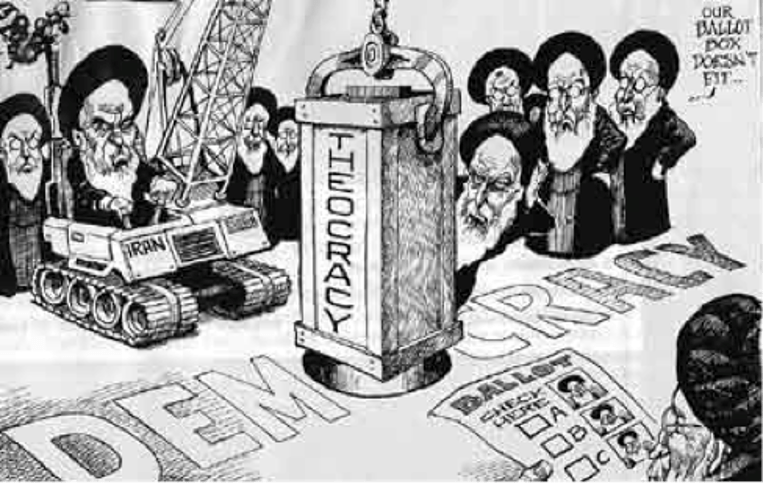
What has become clear is that September 11 distracted America from pursuing its true Middle East enemy, the country that for the prior 22 and subsequent 25 years pledged “Death to America.” In retrospect, Iran’s aspirations, theocratic foundations, anti-Western anti-democratic underpinnings, pursuit of nuclear weapons, development of ballistic missiles, and uniform opposition to U.S. interests created a formidable, long-term threat, a threat far greater than that of a decentralized, non-state terrorist group like Al Qaeda. Targeting Iran instead of Al Qaeda would have dealt a blow to an established state infrastructure that funded, and continues to fund, anti-American proxy groups across the Middle East. Unfortunately, that didn’t happen…, an outcome that Osama bin Laden would have found thoroughly satisfactory.
Finally (from a good friend)
No Comments